- More
- Back
At their best, biographies are a fascinating blend of truth, history and extraordinary characters, so real and vibrant that if I dared to place them in a fiction novel, I’d be accused of stretching the bounds of believability.
The best autobiographies do something a novel can’t: they tell you that the implausible really happened. A boy in a South African village becomes the father of a nation. An English schoolboy with a stammer wins a world war by writing better speeches than anyone else. A German-Jewish novelist writes his own eulogy and posts it to his publisher the day before he dies.
These twelve are the autobiographies and biographies I return to — for courage, for craft, for the reminder that extraordinary lives are written one decision at a time. A few are heroes of mine (Lincoln, Gandhi, Mandela). A few are friends (David Niven, whose Moon’s a Balloon I’ve re-read more than any other). All of them changed me as a writer, and most of them changed me as a man.
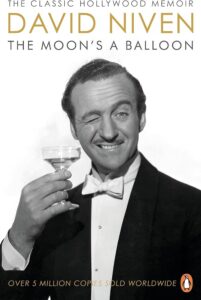
1. THE MOON’S A BALLOON by David Niven (1971)A few years after this came out, I found myself on tour with David Niven. He was publicising the follow-up, Bring on the Empty Horses, and I was publicising Not a Penny More. I remember being at one signing session where David had three hundred people queuing up to meet him and I had half a dozen! But there was never an ounce of arrogance from the man. Charming, engaging, generous… what you saw on screen was what you got in person.
He did admit to me that some of the stories in the books had actually happened to other actors but, again, does that really matter? He tells the stories so well that they become his stories.

One of the books I have pressed on more people than almost any other.
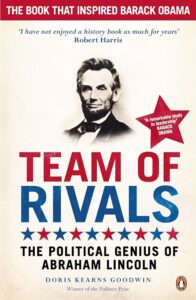
Goodwin’s subject is Lincoln’s cabinet — the extraordinary decision, in 1860, to appoint his political rivals to the most powerful positions in the government. Seward at State. Chase at Treasury. Stanton, later, at War — a man who had been one of Lincoln’s fiercest public critics. The thesis of the book is simple and brilliant: great leaders are not frightened of people who disagree with them. They are drawn to them.
Lincoln had his rivals. And he governed at the trickiest moment in American history — the Civil War — with those rivals around the table. He could charm them, he could convince them, he could make them go down his road. I have never thought of Lincoln as a politician. I have thought of him as a brilliant lawyer, a brilliant and good man, who brought a country through a civil war and was murdered for his trouble. One of the three great American presidents.
One thing from the book, or possibly from my own readings around it, has always stayed with me: the Gettysburg Address is chiselled on a single slab in Washington. It takes about five minutes to read aloud. It is remembered as one of the greatest speeches in history. Every politician learning to write a speech should be told the same thing: shorter is almost always better.
Team of Rivals also features on my forthcoming Top Political Novels list — as I alss enjoy Lincoln’s cabinet through the lens of political leadership rather than biography.

Gandhi is a staggering hero for me, a lawyer.
A very well-educated man, trained at the Inner Temple in London, who began his public life in South Africa — where he was told, repeatedly, that he was not acceptable because of his colour. He came back to India. He built a movement. He insisted that everything could be done peacefully, and for the most part, impossibly, it was.
His death probably made him, the way John Kennedy’s death made Kennedy. You kill someone like Kennedy or Gandhi and they become gods. But Gandhi deserved that status, which is more than you can say for most of the world’s gods. I remember being a boy and having him as a hero — and I remember, very clearly, that my elders and betters despised him. They thought he was a menace to the British Empire. That is almost always a useful sign that you are on the right side.
Experiments with Truth is not an easy book. He is not trying to be liked. He tells you about his mistakes, his cruelties to his wife, his experiments with celibacy and with diet and with politics, and he does not paper over any of it. He was a complicated man and a great man. Both things can be true.

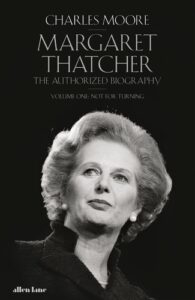
Over the course of my recent life, there is one subject, much more than any other, that gets mentioned when I’m talking to people: Margaret. Just the other day, a very famous and very successful man who’d only met her once said to me, “I envy you for one thing only: that you were a personal friend of Margaret Thatcher”.
At the time, I don’t think any of us knew how significant a period it would be in the country’s history but, looking back over the last four years and four different Prime Ministers, it’s not hard to understand how special she was. Although some people will argue that the public did eventually fall out of love with her, let’s not forget that Churchill lost the first election after the war. Politicians naturally go through those changes in fortune, but when we look back over the last 100 years, Churchill and Margaret will be remembered as our two great PMs.

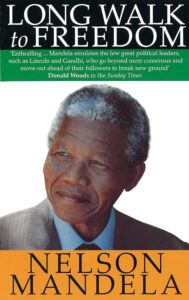
Just think about what this man had gone through. It would have been so easy for him to come out of prison and say, “Let chaos rule! Let’s give as good as we got!” In fact, he did the exact opposite. He said, “Let’s be kind to each other. Let’s try to forgive and move forward into a brighter future”. A giant of a man! He actually wrote to me once, saying that he was coming to England, but I sadly never got the chance to meet him.
He very kindly invited me to lunch at the South African Embassy in London, but I was abroad on a book tour and my publishers — perfectly reasonably — did not want me to cancel the tour and fly back to meet him. So I wrote to apologise, and he wrote back, a generous letter I still have. He read Kane and Abel when he was in jail. I am not sure anything any publisher has ever told me has meant more than that sentence.
Long Walk to Freedom is the book he wrote about a life that did not need embroidering. Twenty-seven years on Robben Island. A walk to a press conference, at sixty-nine, and a speech that held its temper where most men would have lost it.
Read it for the patience. Read it for the refusal to seek revenge. Read it because, every so often, a man does exactly what he said he would do and it changes a country.

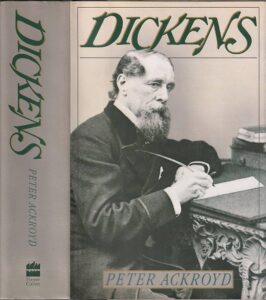
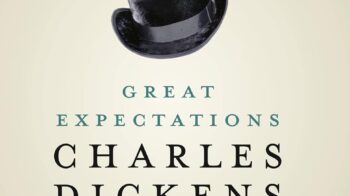
It’s very difficult for me to be objective about Dickens because I’m such a huge fan. I’ve read everything he wrote and a lot of the stuff that’s been written about him. The reason I settled on the Ackroyd book – as opposed to the countless other biographies out there – is that it seems to be the most comprehensive and, even as a fan, I came away from it having learned a lot about him.
For instance, I wasn’t aware that his affair with the beautiful young woman, Ellen Ternan, was so much more than a weekend dalliance, he really did love her. And this story made me smile… after Hans Christian Andersen came over from Denmark to stay with him, Dickens said to his son, “That man is the biggest bore in Christendom, and arguably the greatest storyteller that has ever lived”.
After all these years I’ve spent with Dickens, I think I’ve finally got the measure of the man. I’d love to say that we have a lot in common, but the only trait we seem to share is that we both love going around the country, reading our books to people and showing off.

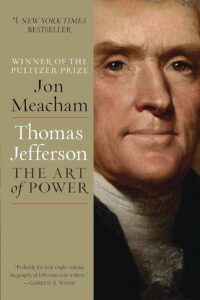
This is the man who wrote both the Constitution and the Declaration of Independence. Although he started out working alongside the Founding Fathers, they were so impressed with him as a writer, a statesman and a philosopher that they ended up letting him do most of the work.
If you look back to that time, there were an awful lot of truly great names, giants of American politics. But you could say the same about Britain and Europe. The reason was simple: unlike today, the most talented out there generally went into politics.
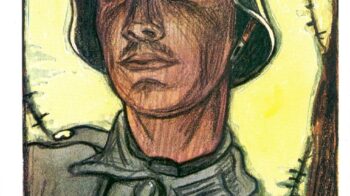
8. BEHIND ENEMY LINES: THE AUTOBIOGRAPHY OF BRITAIN’S MOST DECORATED LIVING WAR HERO by Sir Tommy McPherson and Richard Bath (2010)When it says, “most decorated”, it’s no joke. He won three Military Crosses, three Croix de Guerre, a Légion d’Honneur and a Papal knighthood. During the Second World War, he was behind enemy lines for four years and never slept in the same bed for more than one night. He worked with both French and Italian partisans, and single-handedly negotiated the surrender of two Axis units, totaling over 20000 men. He was a phantom… a superhero. He should never have survived.
I was lucky enough to meet him when he was President of Athletics at Oxford and immediately loved the man; he was everything that I admired. We won the war and were able to establish our modern, free democracies because of men like Tommy.
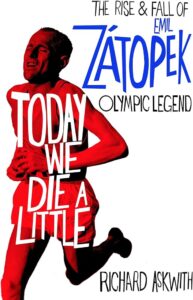
On the whole, I’m not really a fan of sporting biographies. The modern ones tend to be quite dry and what these ‘heroes’ have achieved doesn’t always add up to much. But then you’ve got someone like Zátopek. In the 1952 Olympics, he won both the 5000 and 10000 metre races in Olympic record times, then – just in case we weren’t convinced – he asked if he could run in the marathon. It was the first marathon he’d ever run in his life. And he won it. In Olympic record time! He wasn’t much to look at and, when he ran, he had the gait of a clobbering, old carthorse but, my god, he was the best.

A work of genius. A book that should have won the Nobel Prize.
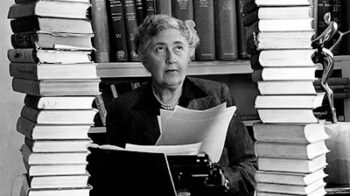
Stefan Zweig is arguably the greatest author I have ever read. David Young — Lord Young, the great advisor to Margaret Thatcher — told me he thought The World of Yesterday was arguably the greatest piece of writing he had ever read. I would not go quite that far, but I would not argue hard against it either. This is his memoir of the vanished Europe his generation lost — the Vienna of before 1914, the coffee-houses, the quiet certainties — and the slow suffocation of that world under Hitler.
Zweig wrote only two novels, but he wrote several novellas, and if you have never read them you should rush to the shops now. Amok. Fear. Letter from an Unknown Lady. The Chess Story, his final work. I have read Amok five times. I read it while I am writing. It is to remind me how pathetic and feeble I am.
The tragedy of Zweig is that he did not survive the war he was writing about. He and his second wife committed suicide in Brazil in 1942, having concluded that Hitler was going to win. He was wrong about that, and the world had to manage without him, and I think it has managed less well than it would have done. Read him. You will find a civilisation Europe lost, and the writer who mourned it better than anyone.

Judi is an old friend. I used to send her flowers on the second night of her new plays, with a card reading: “Now all your other lovers are dead, here are mine.” She always said it made her laugh. We became close friends over the years, and I love her very much.
This book — her memoir of a life spent with Shakespeare — is as warm, sharp, and self-deprecating as she is in person. She has played every great Shakespeare role a woman can play, and I asked her once which performance she was proudest of. Her answer was Lady Macbeth. (Her second answer was the Nurse in Romeo and Juliet, delivered three times, because she refused to let that character be played as comic relief.)
If you want to know what the English stage looked like in the second half of the twentieth century, read this book. Dench and Maggie Smith are the two great actresses of my lifetime, and Judi is the one who can still, at ninety, hold a screen for forty-five seconds of silence while her face does everything Shakespeare needed.

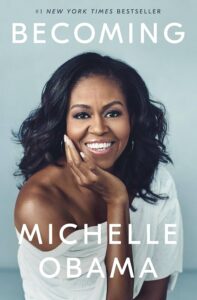
A rousing and candid memoir that resonates with the warmth, wisdom, grace and strength of its author. Reading her story was a total delight. The narrative, which charts her journey from a working-class neighbourhood in Chicago to the White House, drew me in and is deeply human. The reflections on her personal, professional, and public life offer a unique perspective on American history and politics of the period, and the realities of it all.
What I admire most about this book is its honest portrayal of the challenges and triumphs she faced, both as the First Lady and as a woman striving to balance her roles. Michelle’s voice is totally authentic and engaging, making the reader feel like a confidant, almost a friend, rather than a spectator.
Much more than a memoir, this is an invitation to reflect on our her, but also our own journeys and the potential we hold to shape our destinies.
A must-read for anyone seeking inspiration and a deeper understanding of one of the most influential women of our time, and hopefully our future.

I couldnt leave this one out. It’s the life of one of history’s most intriguing figures, viewed through the lens of a biographer who has truly mastered the art of storytelling. Tomalin’s meticulous research brings Pepys to life with vivid detail and analysis, turning the 17th-century diarist into a flesh-and-blood character with whom we can relate.
What makes this biography stand out is Tomalin’s ability to weave the personal, political, and social fabric of Pepys’ time into a narrative that is both educational and immensely entertaining. She delves into his diaries, unearthing the flawed fullness of his character – his ambitions, his indiscretions and his humanity. A time-travelling glimpse into the Restoration era, highlighting Pepys’ role in pivotal historical events and everyday life in London.
I’ve written my own story once — in prison, in longhand, in three volumes.
A Prison Diary covers my two years inside. It’s the most honest thing I’ve ever written, and the book readers still write to me about more than any other.
Read Chapter 1 of A Prison Diary (Hell)
More Unputdownable lists
Top 10 Agatha Christie Books
Top 12 Best Classic Novels of All Time
Join my community
I send occasional personal letters to readers about the books I’m reading, what I’m writing, and what’s coming next. No spam, just notes from me. Please sign up below if interested to hear more.