Top 10 Best Agatha Christie Books

The Poirot, Marple & Standalone Mysteries Jeffrey Archer Rereads Every Year

What one learns from Christie — and what writers have been trying and failing to learn for a hundred years — is that she makes the complicated look very simple and easy.

That is her genius. Anyone can set out to try to be Agatha Christie. Of course, no one can.

Embarking on the task of selecting my favourite works by Agatha Christie – a writer whose plays, books and short stories have captivated me since my childhood – has been a journey filled with both nostalgia and admiration.

I still vividly recall the first time I visited her world, a world so intricately woven with mystery and suspense that it leaves an indelible mark on the reader.

Was it a challenge to whittle down her extensive output to a mere 10 books? Unquestionably so. Given the opportunity, I would eagerly list 20 titles and still feel the pang of leaving out several beloved works. Each book by Christie is a masterclass in storytelling, her craft so refined that choosing favourites seems a disservice to her genius.

I first read Christie as a boy, and I read her again last month. She is the writer I recommend to anyone who thinks they don’t like mystery novels — because nobody can read And Then There Were None and not feel that small, delicious shock of being outwitted.

Here, in order, are the ten I’d take to the desert island.

The best Poirot books in this list

Hercule Poirot appears in seven of the ten — The Mysterious Affair at Styles, where he first walks into English fiction; The Murder of Roger Ackroyd, the audacious one; The ABC Murders; Murder on the Orient Express; Death on the Nile; Evil Under the Sun; and Five Little Pigs, the cold case. If you ask me which are the best Poirot books to start with, I’d say Roger Ackroyd and Orient Express — read them in that order, and you’ll see why she dominated the genre for fifty years.


The best Marple books in this list

The best Marple books in this list are The Murder at the Vicarage, where she first appears as the village busybody turned detective, and A Murder is Announced, which I think is the finest Marple novel Christie ever wrote. Both made the cut because Christie trusts the reader — the village itself is doing half the detective work, and Marple just notices what no-one else has time to. If you’ve never read Marple, start with these two; the best Marple books are the ones where Christie keeps the magic small and the suspects close.

See below for my Best 10 Agatha Christie books, ranked and in order.


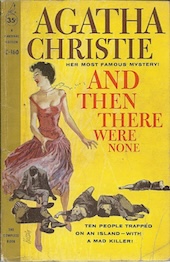
Agatha Christie — And Then There Were None book cover1. AND THEN THERE WERE NONE (1939)

Her masterpiece.

This is at number one because I honestly think it’s the best thing she ever did. There were rumours that Christie’s plot was influenced by other works at the time, not to mention her own book, The Murder of Roger Ackroyd.

Ten strangers are summoned to an island off the Devon coast. They cannot leave — the boat does not come back. One by one, they are killed, in the order of an old nursery rhyme, and each of them, it turns out, is guilty of something. You’re all stuck there because you’re all evil people. And you’re going to be killed off one by one because you’re all evil people.

Christie took the central idea from a translation of a German novel, and has been perfectly open about it. I find it hard to believe the original was in the same class. She rewrote it, tightened it, and produced the most perfect closed-circle thriller ever written. It is the book other crime writers — Knives Out, Glass Onion, every country-house homage — keep trying to match. None of them quite does. I shall not tell you how it ends. That would be criminal.

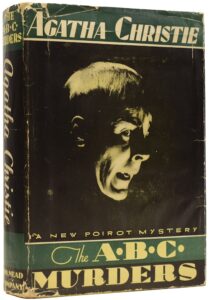
2. THE A.B.C. MURDERS (1936)

The David Suchet version on TV was excellent. It’s such a clever idea, and yet such a simple one, which is what Christie was always so good at. Going through the alphabet, with each murder corresponding to the next letter. This being Christie, things are not so simple: a little misdirection here and there, a (not so) obvious culprit, a clever bluff from Poirot.

I first read this book when I was 16 or 17 and I was astounded by how good it was. Here we are, more than 60 years later, and it’s lost none of its power. Or its mystery!

A small confession on Suchet: I’m sentimental about him as Poirot because David and I were at school together. He’s a dear friend. So when I watch him play Poirot — the way he gets the English wrong the whole time, so cleverly written — I’m seeing a man I know turn into someone you’d love to meet. That’s why his Poirot will outlast every other

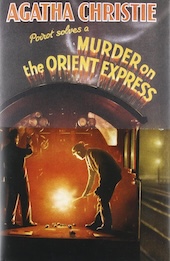
3. MURDER ON THE ORIENT EXPRESS (1934)

Because of the big screen adaptations – the 1974 version directed by Sidney Lumet and starring Albert Finney as Poirot was a huge success and picked up a whole heap of Oscar and BAFTA nominations – it has become Christie’s best-known work. I. After you’ve seen David Suchet, it’s hard to watch anyone else.

A train. A dead man. Twelve suspects. Snow stops the carriage. Poirot is on board. You know the setup — everyone does.

What you may have forgotten is the mechanism. Every one of them stabs him, and Poirot works out, because of the wounds, that it couldn’t have been one person. That single detail — a pathologist’s observation turned into a plot — is what makes the book great. She does not cheat. The wounds give the game away to Poirot before they give it away to us, and when he explains it, we realise the whole novel has been hiding in plain sight.

It has been filmed a dozen times and will be filmed a dozen more. Read the book first. The pages are cleverer than any film.

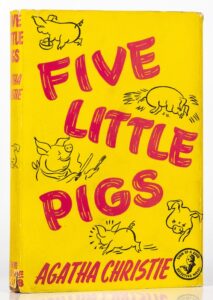
4. FIVE LITTLE PIGS (1942)

A cold case, sixteen years on. A man was poisoned. A woman was convicted and hanged. Her daughter comes to Poirot believing her mother was innocent, and Poirot must reconstruct a murder from the memories of five witnesses who were there.

This is Christie in an unusual register — slower, more melancholic, more interested in the passage of time than in the mechanics of the puzzle. The person who was convicted was hanged. And that was the point that he got her off. Poirot cannot undo the execution. He can only establish the truth, and let the daughter carry it. It is the most quietly devastating of her novels, and among the finest.

What I love most is the structure. Five witnesses, each telling Poirot the same week of their lives, sixteen years on. Five different memories of a single house, a single summer, a single crime. The same event seen from five angles, each angle illuminating something the others missed. The instinct she had — looking at the same event from many different angles — is one I have spent my own career trying to learn.

I will say this about Christie, and it is true of so many writers of her era. She could not write today what she did back then. You could not now gather six people in a room and ask them to listen to Poirot or Marple lay out their reasoning until the murderer was revealed. Three would not turn up to the meeting. Two would call a lawyer. One might stay along for the journey. The world has changed.

But that does not diminish her. It increases her. She was so brilliant, and so adaptable a writer, that I am perfectly certain she would simply have adjusted her technique to fit the world she was given. She was born in the right age for Five Little Pigs. Had she been born today, she would have written something else as brilliant for our age. That is the difference between a great novelist and a good one.

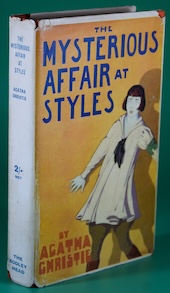
5. THE MYSTERIOUS AFFAIR AT STYLES (1920)

Almost impossible to believe this with Christie’s firs published novel and her first ‘detective’ novel and, as such, is the first time we meet this Belgian chap, Hercule Poirot – probably now the #1 detective in literary history.

Christie’s debut — the novel that introduced Poirot. Captain Hastings narrates; Emily Inglethorpe is poisoned; and every subsequent detective novel Christie wrote has a piece of Styles in its DNA.

It is a good book. Not her masterpiece, and I don’t think she would claim it was. But for a first novel — a first detective novel, at that — the architecture is already in place: the country house, the isolated suspects, the little Belgian with the moustache who notices what nobody else has noticed.

There is a lot of crime writing out there. A lot of excellent books and a lot of average books. Every now and then, we hear about a best-seller who is supposed to be the new Agatha Christie.

Let’s be perfectly honest here… there’s never been a ‘new Agatha Christie’ and I doubt if there ever will be.

If you want to read her in order, start here. If you want to read her at her peak, skip ahead to Roger Ackroyd or And Then There Were None.

One last word on Hastings. He is interesting. He is a sidekick — there for a purpose, meant to be a not-very-bright captain who does what I call the footwork. Every great detective needs a sidekick. You get the Dr Watsons, you get the Hastings — and they are very important. Even in the case of Jeeves: Jeeves is the hero, but Bertie is the sidekick really. And Miss Lemon, too, of course, is a sidekick — she is in every Poirot. She is his indefatigable secretary, who is, of course, extremely bright and extremely tolerant of this rather strange man.

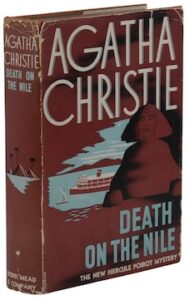
6. DEATH ON THE NILE (1937)

Christie takes us to Egypt, and wow, what a setting. The river, the sun, the dahabiyahs. The Cataract Hotel at Aswan, the temples at Karnak, the steamer winding south towards Abu Simbel. Christie had spent six months travelling Egypt with her archaeologist husband Max Mallowan in 1933, and you can feel that on every page. She was not researching from the comfort of her library. She was there. And it shows.

The plot, in two sentences, because I will not give you more. A young, beautiful, fabulously wealthy English heiress steals her best friend’s fiancé and marries him in three weeks. The two of them honeymoon in Egypt — and the abandoned best friend follows them, hotel by hotel, dahabiyah by dahabiyah, never quite close enough to confront, never quite far enough to ignore.

What you get with Death on the Nile is everything Christie does brilliantly elsewhere — the closed-circle setting, the impossible alibis, the small misdirection that turns out to be the key — but you also get Egypt, written by a novelist who genuinely loved the country. That is the difference. Most Christies could be transposed to any English drawing room. This one could only have happened on the Nile.

I have seen all the films. The 1978 Peter Ustinov, the 2004 David Suchet for television, the 2022 Kenneth Branagh. They all have their merits — and the costumes, the cinematography, the casts are all marvellous. But I remain at heart a Suchet man. Suchet is Poirot. The others are doing impressions of him.

Read the book first if you can. Then watch all three films. Then read the book again. You will not regret a single hour.

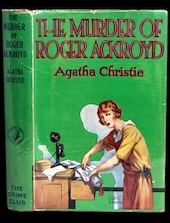
7. THE MURDER OF ROGER ACKROYD (1926)

Ackroyd’s so genuinely original. A book that blew my mind! Christie was so daring with this one and the ending really is something else – it turns the whole book upside down. For some people, it’s regarded as Christie’s masterpiece and it’s difficult to argue with them. It was a game-changer in crime fiction.

The book that broke a rule, and in breaking it, made Christie immortal.

The genius of Roger Ackroyd is that the man who’s telling you the story is the criminal. It is the most daring narrative trick in the history of the detective novel, and it caused fury at the time — readers accused her of cheating. She had not cheated. Every clue is on the page. You simply trust your narrator, which is what any sane reader does, and that trust is the con she is running on you.

Go back and read the opening pages after you have finished. The misdirection is so elegant, so quiet, that you will want to applaud her. I did.

If you’ve never read any Christie, this is the perfect place to make a start. You won’t be disappointed.

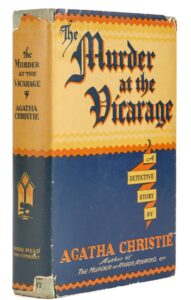
8. THE MURDER AT THE VICARAGE (1930)

Here we meet Miss Marple — and I have to say, I am very fond of her. Of all the great fictional detectives, she is the one I find myself returning to most often, and I will tell you why.

The plot is the model of the village mystery, and Christie wrote the model. Colonel Protheroe is the local magistrate, a self-important bully whom almost everyone in St Mary Mead has reason to dislike. When he is found shot dead at the vicar’s writing desk, the village fills up with suspects, alibis, and competing theories. Miss Marple — elderly, white-haired, fond of her garden, generally written off as a harmless old spinster — solves it.

I love the original Marple — Margaret Rutherford, in the BBC adaptations from 1986 onwards. Rutherford was a brilliant actress, and she did something extraordinary with the part. She played Marple as the woman Christie wrote — quietly observant, gently unforgiving, and with a steel in the spine that the men around her always underestimate, right up until the moment they cannot. Hickson was the definitive Marple, and I have never seen anyone come close.

What makes Marple a great character — and what makes The Murder at the Vicarage a great book — is what she represents. Marple is not formally educated. She has never been to a university. She has not been trained in police work or law or anything else. She is a woman of her generation, and her generation did not give women the chance to be anything else. And yet she sits in rooms with magistrates, vicars, doctors, retired colonels — men who have been to the best schools and the best universities and the best regiments — and she runs rings around the lot of them. She sees what they cannot. She solves what they cannot. And the men, having been beaten, do what beaten men so often do, which is pretend they had it sorted out themselves all along.

Christie was making a quiet point about the women of her own generation, and I have thought about that point all my life. There were so many women like Marple — clever, observant, capable, denied a formal education and the opportunities that go with it — who never had the chance to become what they could have been. Imagine what those women might have become if the world had opened a door for them.

I think of my own mother, Lola, when I read Marple. She was a woman of formidable intelligence, born in the wrong decade for it. She did not have the chance, in her youth, to do what an equivalent young man would have done. But Lola was not a woman to accept that as the end of the story. In her fifties, she went back and started taking exams. In her sixties, she took her degree. Eventually she became a local authority councillor, and she served her community with a sharpness of mind I never stopped admiring. Imagine what Lola might have become if she had been a man, or if she had simply had the opportunities a young woman has today.

That is what Marple represents to me. The undervalued cleverness of a generation of women, finally walking into the room and showing the men exactly how it is done. Christie understood it. Hickson understood it. And every time I open The Murder at the Vicarage, I think of my mother.

For me, Poirot is more exciting than Miss Marple. But you’ve got to admire the fact that Agatha Christie — a truly capable woman herself, not just a damn good storyteller — was telling us there are women out there men just think are old ducks who paddled through life when there’s much more to them. And Miss Marple is one of those people. So when the chief of the police can’t solve the crime, in she comes. Of course they all dismiss her, tell her she’s wrong. But she points out the one clue they’ve missed, and then another, and then another, and she solves the whole thing — but lets them take the praise. Clever, Miss Marple. Clever, Agatha Christie.

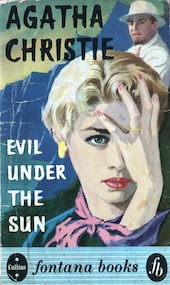
9. EVIL UNDER THE SUN (1941)

Evil Under the Sun is set in the West Country — a part of the world I love so much — where Poirot and Hastings are, in theory, going on holiday. Hastings to play golf, Poirot to relax, eat and drink, which he likes doing a lot of. And Hastings spots a famous actress also living down there, with a beautiful home. And no holiday for Poirot — because she is strangled. They call him in to solve the crime. Once again, he gathers six suspects into a single room, and tells you how he solved it and what were the clues we all missed. Great fun. A typical Poirot.

I adore the 1982 film. Diana Rigg as Arlena, the murdered glamour. Maggie Smith as the proprietress. James Mason. Roddy McDowall. Peter Ustinov as Poirot. Anthony Powell’s costumes. Cole Porter songs on the soundtrack. Filmed on Majorca, standing in for the Devon coast. One of those productions where every element is a masterclass and the ensemble is greater than the sum of even those formidable parts.

I was a great admirer of Diana Rigg — formidably intelligent, formidably funny, one of the great British actresses of her generation. And Maggie Smith I have spoken about elsewhere on this list. Together in this film they are unstoppable, and they are reason enough by themselves to set aside an evening for it.

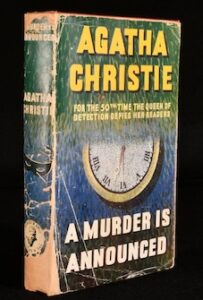
10. A MURDER IS ANNOUNCED (1950)

Of course, the title is wonderful. And the announcement in the local paper is genuinely an original idea. “A murder is announced and will take place on Friday October 29th at Little Paddocks at 6:30 pm. Friends, please accept this, the only intimation.” The villagers of Chipping Cleghorn turn up at Letitia Blacklock’s house at the appointed hour, treating it as a parlour game. The lights go out. A man enters with a torch and a gun. Three shots — and the gunman himself ends up dead.

Marple makes the best of that. It’s ideal for her, this sort of situation, because the police are completely fooled. But of course, she comes up once again with the clues that no one else has spotted. That is what Marple does — she sees the village. She sees the people in it. She sees what they are pretending to be and what they actually are.

Is it her finest Christie? Certainly not. Christie wrote And Then There Were None, Roger Ackroyd, Five Little Pigs — there is a lot of competition. But I accept it as the best Marple. And what makes it the best Marple is the world Christie sets it in: a 1950 Britain still papered with displaced persons, lost identity papers, and people who had refashioned themselves entirely after the war. In that world, Marple is the one character who never forgets that anyone might be anyone. That is the engine of the book, and the reason Christie sat her at the centre of it.

Christie on Screen

Christie has been filmed more than almost any novelist alive or dead, and it is worth a short word on which adaptations to seek out.

For Poirot, there are two that matter. Peter Ustinov played him in the late seventies and early eighties — Death on the Nile, Evil Under the Sun, Appointment with Death — and his films catch Christie’s appetite for foreign settings beautifully. Then there is David Suchet, who took the role to television and stayed in it for twenty-four years.

As I mentioned earlier in this list, David and I were at school together. He is a dear friend. But sentiment is not why his Poirot will outlast every other — it is the work. He played every story in the canon, the way Christie wrote it. The rest of us are now stuck measuring everyone else against him.

The films keep coming. Murder on the Orient Express alone has been filmed a dozen times and will be filmed a dozen more. They are entertaining enough. But the pages, as I have said, are cleverer than any film. Read the books first.

Why Christie endures

People sometimes ask me why Christie has lasted when so many of her contemporaries — Sayers, Allingham, Marsh, all of them excellent in their day — have not. The simple answer is that the decision is made by the public. Full stop. A hundred years on, the public is still buying her books, still watching the adaptations, still solving the puzzles for themselves. That is the only verdict that matters.

What I learned from her, as a writer, is the discipline. Anyone might set out to try to be Agatha Christie. Of course, they cannot be. That is her genius — she makes the complicated look simple. 

I couldn’t have written my William Warwick Detective series without Christie. The closed circle of suspects. The slow reveal. The economy of the clue. The discipline of never patronising the reader. All of it I learned from her. None of it have I matched. But I keep trying.


My William Warwick Series starts with Nothing Ventured – a young CID officer, a stolen Rembrandt, and the case that made his career.

Read Chapter 1 of Nothing Ventured (WW1)
See all William Warwick books


More Unputdownable lists

Top 14 Best Murder Mystery Novels and Books
Top 12 Best Classic Novels of All Time