- More
- Back

USA


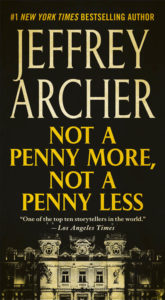
In 1974 I was bankrupt, out of Parliament, and had been told by people I respected that there was no money in books and I would be better served doing something sensible. I did not listen. I sat down and wrote Not a Penny More, Not a Penny Less, partly to express my anger at having been swindled, and partly because for a few hours each day I could control something on a page when I could control nothing in my life.
It took fifteen publishers to turn the book down before someone said yes. Fifteen. My agent Deborah Owen — and may God bless her name — kept going. Through every rejection her line was the same: “The public will decide. Let’s get it published.” Doubleday took it in America. Jonathan Cape took it in Britain — paying £3,000 for it and printing three thousand copies. When that first hardback arrived in my hands, finally something to hold, I will not pretend it was not the most relieved I have ever been about anything.
The book did not set the world alight in 1976. Three thousand hardbacks. A few more in paperback after twelve months. Modest. But — this is the curious thing about books — they can be stubborn. If a story finds readers who care about it, it refuses to die. It is passed from hand to hand. It is pressed on friends with the words: you’ll enjoy this one.
Charles Dickens was twenty-four when he wrote The Pickwick Papers. He was broke. He had been a parliamentary reporter. He wrote himself out of obscurity, chapter by chapter, on monthly deadlines, because he had worked out — quicker than anyone else of his generation — how readers wanted stories delivered. Pickwick proved a first novel could change a man’s life. He was not the last to prove it.
So how do you get your first novel published? You write a book that is good enough to refuse to die. You find an agent who will fight for it. You send it out, and you brace yourself for rejection — because rejection is not a verdict on you. Send it again. Send it to the sixteenth.
And then — and I cannot stress this part enough — you start the next one. The worst kind of writer is the one who finishes their first manuscript and waits. The best kind is the one who finishes their first manuscript and writes their second.