- More
- Back
Writing is, by its nature, a solitary pursuit. Whether you are crafting a novel, a play, or a screenplay for film or television, you spend a great deal of time alone with a blank page, a pen or a pencil (or a typewriter or computer) and your own doubts.
And yet, as I write these words in 2026 – my fiftieth year as a published novelist – I am reminded daily that books do not live alone. They only reach readers because of a team: editors, agents, researchers, publishers, booksellers, publicists, translators, producers, and many others too numerous to mention individually here. I have been incredibly lucky to work with so many gifted people over the decades, and I will always be grateful to them – and, above all, to the readers who have kept me company all these years. I know many authors now self-publish, and do almost everything themselves – and kudos to them – I could not have done it without the many amazing people around me.
This year brings two moments that have made me look back with gratitude and look ahead with the excitement of a beginner. Pan Macmillan – alongside our friends at St. Martin’s Press – are re-releasing Not a Penny More, Not a Penny Less in a 50th anniversary edition, and I promise you I am just as thrilled as I was when it first appeared in 1976.
Not a Penny More, Not a Penny Less was rejected by fourteen publishers. The fifteenth gave me a £3,000 advance. The first edition sold three thousand copies in a year. Three hundred million copies and thirty-odd novels later, people sometimes ask me what I learned in those first five years of writing — when nobody was waiting for the next one and nobody had heard of me.
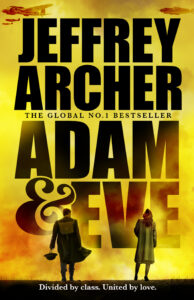
After fifty years of storytelling, I have also decided the time has come to write my final big novel: Adam and Eve, published in October 2026. It began, as so many stories do, with a question. What if Hitler had not changed his mind on 15 September 1940, and Operation Sea Lion (Seelöwe) had gone ahead? Could the Second World War have ended within days – and who would have been the victor? I decided to tackle that challenge through the eyes of two young people, born on Armistice Day 1918, from worlds apart: the daughter of an earl and the son of a shepherd. Their lives – and their love – take us to that fateful day in 1940 when history might have turned in a different direction.
None of what follows – my tips for writing – are offered as a set of rules, because every writer charts their own course. Some flourish with strict routines; others find magic in the chaos. Consider these simply as a few thoughts from my own writing life – two pence worth – that might give you something to think about as you find your own way.
What follows is the answer. Not a creative writing course. Not theory. Twelve top tops on how to write a novel (my way) – things that have kept me at the desk for fifty years and have, between them, sold rather more books than anyone — including me — ever expected.
There are many great storytellers – Shakespeare, Dickens, Austen, Christie – and there are also modern masters worth studying closely. I have learned from all of them. If I had to recommend one small treasure chest of advice, it would be the guidance F. Scott Fitzgerald left behind in his letters and reflections on craft. His thinking is practical, unsentimental, and rooted in the belief that the reader must be held – and held tightly.
Five lessons of his that have stayed with me:
I would add two more companions on my desk. Aaron Sorkin’s MasterClass is a masterclass in pace, clarity and character. And Aristotle’s Poetics remains astonishingly relevant: not much has changed in the fundamentals of drama for a couple of thousand years. For me it always comes back to story. As Sorkin puts it, you need an intention and an obstacle – something your character wants, and something in the way. Without that, you do not have a story. You have journalism.
If you can, decide when you are going to write and protect that time. Everyone has different demands on their life, but a novel is not often produced in the leftover minutes at the end of an exhausting day. It needs a place in your diary.
My routine has been quite strict. When I am writing, I work in four two-hour sessions – 6-8am, 10am-12 noon, 2-4pm and 6-8pm – using an hourglass to time each stretch. I do that every day for 40-50 days, handwriting every word. Then I take a break and return a few weeks later with fresh eyes.
Your routine will not be my routine, and it should not be. The point is to find a rhythm that allows you to keep turning up.
Do not chase fashion. Do not write vampires, wizards or ghosts simply because they are in vogue. Jane Austen wrote about family life in a small village and gave us six of the greatest novels ever written. If you are not enjoying telling the story you are writing, chances are your reader will not enjoy reading it. Write the story you care about – the one that fascinates you.
Not a Penny More, Not a Penny Less began as a way of turning real anger into a plot. I did not write it because I thought I was a novelist. I wrote it because I needed to survive – and because I knew, intimately, what it felt like to be swindled. Sometimes the most powerful fuel is the thing you cannot stop thinking about.
I wrote Kane and Abel about an immigrant boy from a Polish delicatessen and an immigrant boy from a Boston banking dynasty — neither of which is autobiographical. But the bankruptcy in chapter twelve, and the pride that won’t let a man ask for help, and the slow building of an empire from nothing — those I knew. Write what you know does not mean write only what has happened to you. It means: tell the truth about feelings, even if you have to invent the events.
My ideas rarely come to me when I am sitting at the desk trying to wrestle a story problem into submission. They arrive when I am walking. I take long walks between writing sessions for two reasons: physical and mental. The plot will buzz around in your mind while you are moving – churning over and over – in a way it often will not while you are staring at a page I am lucky to have three places I write — Mallorca, Grantchester, London.
I also keep a pad and pencil by my bed. I have woken up more than once with a solution at 3am and, if you do not write it down, it will vanish by breakfast.
Do not imagine that the first draft of your book is the one that will be published. It will not be. My novels usually take around fourteen drafts and roughly a thousand hours of work although Adam and Eve has been closer to 1,500 hours – and that is before the editors and researchers weigh in with suggestions that then make it better.
I once went to see Sir Matthew Pritchard — Agatha Christie’s grandson, a wonderful short story writer and poet himself, who had been very kind to me. I was seeking advice about the fact that I was then doing sixteen, seventeen, eighteen drafts.
He looked at me and said: ‘Only sixteen, seventeen, eighteen?’ See my thoughts on Christie’s own ten greatest novels.
What he taught me was simple. If you want to be Sir Matthew Pritchard — or indeed Charles Dickens, or Agatha Christie — you have got to work, and you have got to work damn hard.
Rewriting is not a punishment. It is the process. The first draft tells you what the story is. The later drafts make it the best version of itself.
If you think of something better halfway through the writing process, do not be frightened to go back and incorporate it – or even change the story completely.
This has happened to me several times over the years, both with individual characters and with the overall storyline. If you are more interested in a character or a twist than you were when you began, chances are the reader will be too.
I often begin with a synopsis now, but it never ceases to surprise me how quickly the imagination ignores the plan and goes in its own direction once I start writing. Let it. The story sometimes knows more than you do.
When you want an opinion on what you consider the finished manuscript, talk to professionals: an editor, an agent, a producer – someone who is qualified, experienced, and not afraid to tell you the truth. Be prepared for a wide range of feedback. That is not an insult. It is a gift. You now have the chance to refine your manuscript into the finished article.
Do not seek your first opinion from your spouse, partner or best friend. They will lie. And even if they do not lie, they are rarely trained to diagnose what is working and what is not.
There is no substitute for reading the great novelists and storytellers. But do not only enjoy their craft. Take the engine apart and see how it works.
Dumas’s The Count of Monte Cristo is a true classic, seven hundred pages (see My list of 12 Unputdownable Classic Novels Every Reader Must Finish
Then Dumas wrote a sequel of nine hundred pages, in the same year. I keep a copy on my desk for two reasons. The first is that it is the best plotted novel ever written and I study it to learn.
The second is that, when I am tired and ready to stop for the day, I look at that copy and remember that Dumas managed sixteen hundred pages in twelve months without a typewriter, without electricity, and without complaining. I became so fascinated with The Count of Monte Cristo, that I even wrote my own homage to it – A Prisoner of Birth.
Everything you need to learn is there in front of you, if you look carefully enough.
You may be telling your own story and need little research. But if you are writing beyond your own experience, research is not optional; it is the foundation.
It is also a goldmine. The more you research, the more story you find – not just facts, but moments, characters and details that bring the world to life.
Once I know broadly what I want to write, I can spend months reading, watching and meeting people who know the territory. The meetings are often the best. Ask people to tell you their story. Ask what they find most fascinating. You will come away with more than you expected.
When I wrote about Mallory and Everest, I read countless books, met climbers and historians, and watched every programme I could find. With Adam and Eve, I began with speeches by Hitler and Churchill, and I sought advice from historians before I picked up my pen. Research does not slow you down. It gives you the confidence to go faster once you start.
If your body and mind are tired, your writing will not be at its most productive. My best sessions happen when I am well rested – especially as I get older. As well as my walk between the morning sessions, I often take a short nap between the afternoon sessions. You may laugh, but you should not. A tired writer writes tired sentences.
Every writer collects rejection slips. That is not a sign you should stop; it is proof you are in the game. Not a Penny More, Not a Penny Less did not set the world alight when it first appeared. It was turned down by over 10 publishers and only sold modestly at the start. And yet stories can be stubborn. If a book finds readers who care about it, it refuses to die. It is passed from hand to hand with the words, “You’ll enjoy this one.” Word of mouth has always been more powerful than any advertisement.
Proust said we always end up doing the thing we are second-best at. I might have ended up as Chairman of the Conservative Party, or Minister of Transport, or Mayor of London — one of those three. Whereas in fact, I have enjoyed my career as an author.
So if you ask me whether I regret the swindle that ruined me in 1974 — Aquablast, the bankruptcy, the lot — I look back on it now and I say: yes, it may well have been the thing that changed my whole life. For the better. If you are sitting at your desk wondering whether to give up, remember Proust. The thing you are second-best at may turn out to be the thing the world remembers you for.
So if you are learning your craft, do not be put off. It may take several efforts to reach close to your potential.
Even today, it is extremely rare for a first book to be a bestseller.
I always write in a room with no phone, no computer, and no other means of distraction. Friends and family know I am only to be disturbed in an absolute emergency.
As far as I can remember, this has happened just three times: once when the house was on fire; once when my son James got his A level results and confirmed his place at Oxford; and the third was when I was told about the death of Margaret Thatcher.
If you want to write a novel, you must, from time to time, give yourself the gift of silence.
The last thing I will say. I am not a ballet dancer. I am not a countertenor. I cannot play the violin. I tell stories. If that is what you want to do — sit down, set the hourglass, and do not get up until the sand has run. There is no shortcut. There is no trick. There is just the work, the work, the work. And then, with a little luck, a reader.
Allow me to end where I began: with gratitude.
Writing may be solitary, but books are not. If you are reading this and you have ever edited a manuscript, corrected a typo, designed a jacket, sold a book across a counter, translated a sentence into another language, produced an audiobook, recommended a title to a stranger, or pressed a paperback into a friend’s hands and said, “Trust me” – thank you.
And to every reader who has bought, borrowed, shared, reviewed, or simply enjoyed my stories over the past fifty years: thank you for the greatest privilege a storyteller can have – your time.
– Jeffrey Archer
Read the books behind the method.
The tips above came from writing these. Three to start with:
Adam & Eve — my new novel, out this October. The hardest book I have ever written, and the one I am proudest of.
Not a Penny More, Not a Penny Less — my first novel, fifty years old this June, with a special anniversary edition.
Kane and Abel — the book Mandela read in jail, still in print after forty-six years.
Pre-order Adam & Eve Listen to NAPM 50th Chapter 1 Read Kane and Abel Chapter 1
More from the Unputdownable series.
Top 12 Best Classic Novels of All Time
Top 12 Best Autobiographies of All Time
Join my community
I send occasional personal letters to readers about the books I’m reading, what I’m writing, and what’s coming next. No spam, just notes from me. Please sign up below if interested to hear more.