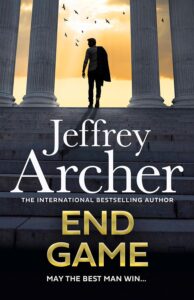
While I was researching End Game, I went down a rabbit hole that lasted weeks. The 2012 London Olympics happened in living memory — I remember watching the opening ceremony, like everyone else — and yet the deeper I dug into what actually went on behind the scenes that summer, the less I could believe.
Some of what I found made it into the novel. A lot of what I made up turned out to be eerily close to what could have happened. And some of the things readers assume I invented — the cyclists trying to block the Queen, the flag mix-up, the cabbie jumping into the Thames — actually happened.
So I set my readers a quiz. Twenty-two incidents from the London 2012 Olympics. Some are real. Some are from End Game. Below are the answers — see how you did.
If you’ve not yet read the book, beware: a few mild spoilers below.
1. The Critical Mass cyclists tried to block the Queen’s route to the Opening Ceremony
✅ Fact. Police arrested three Critical Mass protesters as the Queen’s carriage approached the stadium. The cycling activist group had planned the disruption for months — Olympic security officials had been worried about it for weeks.
2. Hackers targeted the National Grid on the eve of the Opening Ceremony
✅ Fact. Officials thwarted what could have been a lights-out disaster. Cyber threats were monitored throughout the Games, and the digital defences worked overtime.
3. Someone tampered with Usain Bolt’s and Mo Farah’s urine samples
❌ Fiction. Thankfully, no one did. Olympic doping controversies are sadly real, but this particular sabotage attempt — central to End Game — never happened. Bolt and Farah’s legendary performances stand untarnished.
4. The IRA threatened security services during the Games
✅ Fact. The IRA at the time were constantly probing security services with threats. Authorities investigated numerous credible warnings throughout the Olympics. The invisible operation behind the Games was far more extensive than most spectators ever realised.
5. Russia plotted to cut power to the Olympic Stadium during the Closing Ceremony
❌ Fiction. No evidence of this in real life. The actual Olympic power supply was heavily protected, with multiple redundancy systems to prevent any interruption to the global broadcast. This one is pure End Game.
6. A Chinese nerve gas attack was attempted during the Closing Ceremony
❌ Fiction. Exists only in End Game, not Olympic history — but the scenario reflects vulnerabilities security teams genuinely worried about. Chemical weapon threats were among the scenarios planned for. Thankfully, no such attack materialised.
7. A Russian athlete was kidnapped from the Olympic Village
❌ Fiction. Olympic Village security was tight, and no athlete was abducted. Archer’s imagination explores what might have happened had determined adversaries targeted individual competitors.
8. A taxi driver abandoned his cab on Tower Bridge and jumped into the Thames
✅ Fact. On the eve of the Opening Ceremony, this actually happened. Thankfully, river police rescued him. The bizarre incident caused traffic chaos and was a protest against the Olympic Games Lanes — special lanes from which black cabs were banned.
9. Officials displayed South Korea’s flag before North Korea’s football match
✅ Fact. Genuinely. The North Korean team refused to play for over an hour. The diplomatic blunder delayed the game at Hampden Park and created international headlines. Olympic organisers issued a formal apology for the mix-up.
10. A volleyball team reported gunfire targeting their coach
✅ Fact — though the “shots” turned out to be far from lethal bullets. Read End Game to find out what they really were. I wouldn’t want to spoil it.
Enjoying these? The full story is in End Game.
Eleven more to go below — and in the novel itself, all twenty-two thread together into one of the most ambitious thrillers I have written.
11. Fathers 4 Justice activists flew an aircraft over the stadium during Closing Ceremony
❌ Fiction. Airspace over Olympic venues was heavily restricted and patrolled by fighter jets. No activist incursion occurred — though security planners had prepared for similar scenarios.
12. The government deployed 3,500 additional troops days before the Games
✅ Fact. When G4S security staffing fell catastrophically short, the last-minute military deployment made headlines worldwide and cost G4S millions in penalties. Soldiers became an unexpected — but welcome — presence at Olympic venues.
13. A French athlete took his own life after his fiancée’s abduction
❌ Fiction. The Olympics have seen their share of personal tragedies, but this particular tale exists only within the pages of End Game.
14. Brad Pitt and Angelina Jolie applied to carry the Olympic torch
✅ Fact. They didn’t get to carry it, but they did contribute to the spirit of the Games — hosting a star-studded event at the V&A in honour of the late Mohammed Ali, raising funds for the charity Sports for Peace.
15. London cabbies staged demonstrations against Olympic lane restrictions
✅ Fact. The protest snarled traffic around Parliament Square as drivers expressed fury over rules they claimed devastated their livelihoods during what should have been a lucrative period.
16. Terrorists struck London’s transport system the day after the Olympic bid was won
✅ Fact. The 7/7 bombings of July 2005 killed 52 people and injured hundreds more. The shadow of that attack hung over Olympic planning, strengthening the resolve to deliver a safe Games seven years later.
17. A man was arrested for trying to extinguish the Olympic torch
✅ Fact. A 17-year-old sprinted from the crowd in Gravesend, Kent, before security tackled him. The torch relay continued uninterrupted despite his soggy protest attempt.
18. Bodies were buried in the Olympic long jump pit
❌ Fiction. The grisly post-Games discovery exists only in End Game. The sand pits were removed intact. No macabre secrets beneath.
19. West Ham United secured the Olympic Stadium for £2.5m annual rent
✅ Fact. A controversial legacy arrangement. The hotly debated deal saw taxpayers shouldering most conversion costs while the Premier League club gained a world-class venue at a fraction of market value.
20. A police officer was pushed under a Tube train during the Games
❌ Fiction. London Transport Police maintained heightened vigilance throughout the Olympics. They thankfully never encountered this particular horror scenario.
21. A special stand was reserved for holders of counterfeit tickets
❌ Fiction. An amusing scenario, but pure invention. Olympic organisers took counterfeiting extremely seriously and employed sophisticated security features in official tickets. Anyone caught with fakes was turned away — not given special seating.
22. The Queen “parachuted” into the Opening Ceremony with James Bond
✅ Fact. One billion people watched, enraptured, as Her Majesty made her acting debut alongside Daniel Craig. The royal stunt caused such shock that medical assistance was surely required for some overwhelmed fans. Anyone who felt woozy at the sight of the monarch plummeting through the sky — please get in touch.
How did you do?
If you found this fascinating, the novel itself takes all twenty-two of these — fact and fiction alike — and weaves them into the final William Warwick story.
End Game is the eighth and final book in the William Warwick series — Commander William Warwick, head of the Olympic security team, in a race against time as London hosts the world.