- More
- Back

USA


Give me a good murder mystery and I’ll cancel the rest of my day. Not the gore — I’ve never had the stomach for it — but the puzzle. A locked room. A respectable village with a secret. A body in the library, and twelve suspects in the drawing room, all lying. I grew up on Christie, worked my way through Highsmith, watched Galbraith build a modern detective from scratch, and I re-read Patricia Cornwell the way other people re-watch films.
Whittling this down to fourteen was brutal. I could give you thirty murder mystery novels without breaking a sweat, and I’ve probably missed someone’s favourite. These are the books I reach for when I want to be fooled, outwitted, and kept up far past my bedtime. The ones I genuinely couldn’t put down.
Please Note: As the acknowledged boss of this genre, Agatha Christie gets her own separate list!
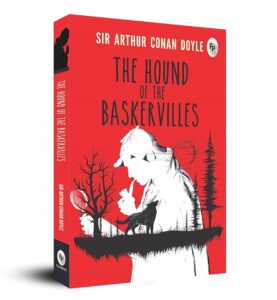
Conan Doyle wrote four novels and fifty-six short stories — a fraction of Christie’s output — and he never thought of himself as an author. He was shocked by his success. Doyle is a genius. There’s no other word for him. He’s a genius. He invented a character. Every reader on earth knows Sherlock Holmes. You can stop a stranger in any country in any decade and they will know who Holmes is. That is one of the rarest achievements in fiction.
What I admire most is the layering. Moriarty is a pretty strong villain. Watson is a strong character in his own right — never a foil, always a friend. And Mycroft, Sherlock’s cleverer elder brother working quietly for the government, is one of the great minor inventions. My brother’s cleverer than I am, Holmes keeps telling us — and when we finally meet Mycroft, we believe him.
The other clever move — and this is what writers can learn from Doyle — is that he makes the establishment dislike Holmes. The Prime Minister is suspicious of him. The civil servants distrust him. And that only makes us love him more, and want him to win. Doyle understood, as Christie did, that readers will follow a slightly awkward hero further than a polished one.
The detective story is thought to have been invented by Conan Doyle. Ironically, not only did he invent it — he became its greatest practitioner. I don’t think he’s ever been equalled. The genius is the human being he gave us as his detective. But the genius also goes to the brother, Mycroft, who he claims is cleverer than he is, and to Watson — a thoroughly decent man who can’t quite keep up with Holmes. Put that together and you have what is called, in book-writing terms, characters. And it’s characters that make books.
The Hound of the Baskervilles is the masterpiece, and I go back to it every few years. If you are introducing Holmes to a teenager, start there.
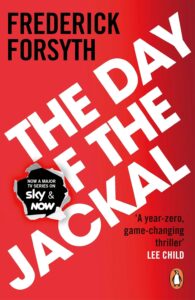
Freddie Forsyth was a dear friend, and one of the finest thriller writers of his generation. He had the same problem I had in the beginning: everybody turned down The Day of the Jackal. He found it impossibly difficult to get published, and when he was finally published, he became a bestseller overnight.
The novel is an engineering drama — a professional assassin preparing, step by patient step, to kill Charles de Gaulle. You know, walking in, that de Gaulle lived to old age. You know, therefore, that the plot fails. And yet the book is compulsive reading, because Forsyth understood something most thriller writers miss: suspense is not about whether it works, it is about how close it comes to working.
I always felt it was ridiculous that Freddie never received a knighthood. It is very hard for storytellers to get a knighthood. If he had won a few prizes and been sold to far fewer people, he would have got one.
He died in June 2025 — the injustice stands. But the books remain. I miss him.
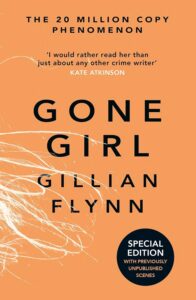
Psychological suspense at its absolute best, this book grabbed hold of me from the very first page and refused to let go.
A wife disappears on her fifth wedding anniversary. The husband reports her missing. The police find a staged crime scene, a diary that seems to incriminate him, and a marriage that was clearly not what the neighbours thought. From there, the floor keeps falling away.
What Flynn pulled off is technically astonishing: the reader’s sympathies switch sides, more than once, across the course of the novel. One moment you are sure he did it. The next, you are sure she staged it.
The next, you are unsure of your own judgment. That is a very hard trick to land, and Flynn lands it. He’s a nasty piece of work — and she tries to pin it on him. It is, in every sense, a novel about two people who deserve each other.
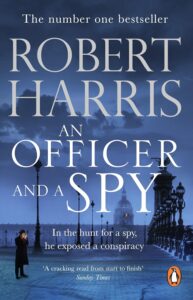
Robert Harris is one of the two or three finest historical novelists writing in English today, and An Officer and a Spy is, in my view, his best book. I told him so.
The subject is the Dreyfus affair. In 1894, a French army officer named Alfred Dreyfus was convicted of treason, publicly stripped of his commission, and sent to a fortress in the Caribbean. He was Jewish. He was innocent. He was put in prison for many, many, many years. It took years — and the extraordinary moral courage of a later officer, Georges Picquart, who is Harris’s protagonist — for the case to be reopened.
What makes the story endure is what the novelist Émile Zola did in 1898. He wrote an open letter to the French President, published on the front page of L’Aurore under the headline “J’accuse…!” — and he accused the army, by name, of framing Dreyfus. They had to open up the whole case. They had to release him from prison. They had to give him compensation. But of course, they had ruined his life.
Harris tells this story as a procedural thriller, which is the correct decision — the slow, lawyerly accumulation of evidence is the real drama of the Dreyfus affair. If you want one of the finest political novels of the last fifteen years, about institutions that have decided to bury the truth for their own convenience, this is it.
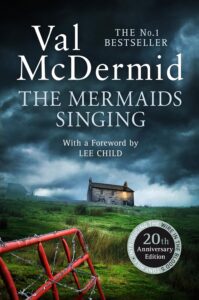
This book introduces us to the character of Tony Hill, a criminal profiler who is as fascinating as he is flawed. Played, of course, by Robson Green in the hugely successful TV series, Wire in the Blood. McDermid’s talent for crafting dark and twisted narratives is on full display here, inviting readers into the mind of a serial killer in a small English town.
But what I enjoyed – if that’s the right word! – most is the way she intertwines the psychological aspects of the characters with the brutality of the crimes, making for a deeply engaging and thought-provoking read. A standout work in the crime canon.
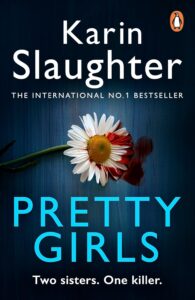
Two sisters, Claire and Lydia are brought together by the disappearance of a third sister, Julia, many years ago. A gripping, heart-wrenching tale that is as much about the strength of family bonds as it is about uncovering dark secrets. The characters are exceptionally well-drawn, with their painful struggles feeling palpably real.
As always, Slaughter refuses to shy away from the harsh realities and the madness that can lurk beneath the surface of ordinary lives. The twists in the story are unexpected and brilliantly executed; a testament to Slaughter’s ability to craft a story that is not only suspenseful but also deeply emotional and, most importantly, character driven.
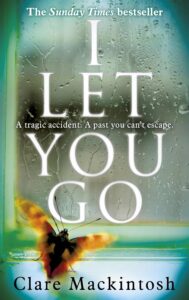
A novel that skilfully intertwines heartbreak with suspense; emotionally charged and yet thrillingly unpredictable – just when I thought I had the plot figured out, Mackintosh introduced twists that left me stunned.
It all begins with a terrible accident, but what we soon uncover is a story of love, loss and the lengths to which people go to escape their past. Mackintosh’s background in the police force lends a striking authenticity to events, particularly in the depiction of the investigation. Like all the best crime novels, it feels frighteningly authentic.
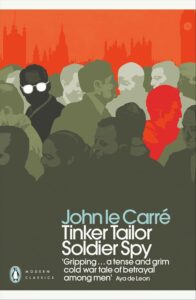
This is, of course, a classic, but I always felt that his earlier stuff was his best, in particular the first two books, Call for the Dead and A Murder of Quality.
They were quite short – almost novellas – but packed real punch. Not that I would have ever dared tell him that. In person, he was a rather fearsome man. And in Smiley, he created one of the greatest characters in English literature.
Younger readers will know the recent film version with Gary Oldman as Smiley but search out the 1979 BBC series with Alec Guinness. A class act!
Le Carré died in December 2020. We have not had his equal in the genre since.
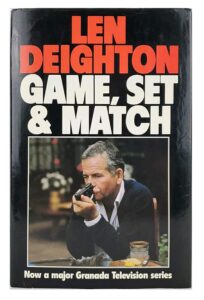 9. GAME, SET & MATCH TRILOGY by Len Deighton (1983-85)
This was a tough choice. His book about Germany winning the Second World War, SS-GB, is a fantastic read, but I went for Game, Set & Match because he manages to keep up that level of energy and excitement over three books. Harry Palmer is Deighton’s most famous creation – a British spy played by Michael Caine on the big screen, although he wasn’t called Harry Palmer in the books – but this set of books involves a slightly older, even more jaded officer called Bernard Samson.
Another damn good storyteller, regularly compared to le Carré, but often referred to as the Angry Young Man of espionage fiction. His books seem to have slipped out of fashion, but he’ll be back. Stories this good will always rise to the top.
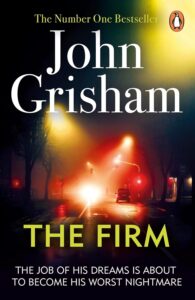
A brilliant man, who has sold a lot of books.
This is a relatively early work and remains his most well known, and perhaps his best (although there are many other greats).
This is a proper blockbuster; BIG storytelling. Why are some authors far more successful than others? If you’d asked me that question a few years ago, I’d have said it’s all about storytelling, no question about it.
But my publishers did a survey where they asked people why they read my books and the most popular answer was: characters. They liked the strong women, who are all based on Mary, of course.
Grisham sells because he gets everything spot on, and you can’t put him down.
The book was then made even more popular by the amazing film, starring the truly brilliant actor Tom Cruise (who hasn’t aged a day).
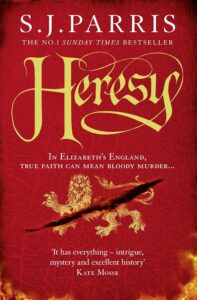
Parris writes about the Elizabethan period with the kind of period accuracy that only comes from serious research worn lightly. Her hero is Giordano Bruno — ex-monk, spy for Queen Elizabeth, and the cleverest priest in Europe. In Heresy, he infiltrates a Catholic conspiracy at Oxford, and the story moves on three tracks at once: theological, political, and personal.
Bruno is a very clever priest who is always ending up in trouble and always getting himself out of it. He’s a great character. That is what makes a series — a character you want to see survive the next book. Parris has given us one, and I read every Bruno novel as it arrives. If you like historical mysteries with genuine erudition — something in the C.J. Sansom vein — she is one of the finest writing today.
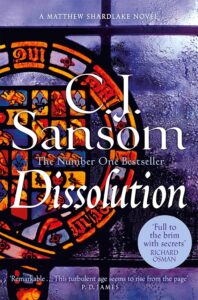
If you have not read CJ Sansom, you have a thrill ahead of you. He was, for me, one of the most unsung writers of the last fifty years.
Sansom was Hilary Mantel, but much easier to read. Although I often found myself struggling to finish Mantel’s books, Sansom never felt heavy or laboured. He should have won the Booker Prize; in fact, I would put him up there with any of the recent Booker winners. Maybe the judges considered him too popular.
Sansom was, by training, a lawyer — and so is Matthew Shardlake. The seven Shardlake novels, from Dissolution (2003) through to Tombland (2018), follow him through the political and religious turmoil of the late Tudor period. Cromwell, Cranmer, Catherine Parr, the young Princess Elizabeth — Shardlake works at the edges of power, watching the great men close up while quietly serving the law. Sansom pulls you right into that world: the royal intrigue, the plots, the lives of ordinary people. It is like getting a history lesson from Elizabeth I’s lawyer.
Sansom is, sadly, another classic example of a brilliant English author who does nothing in the United States. He died in April 2024, at seventy-one, having spent the last decade of his life writing through severe illness. We lost him too soon. The books remain. Read them in order.
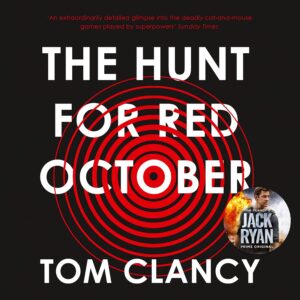
It came out, went straight to number one and it seemed like the whole world was reading it. Looking at it today, the plot does seem far-fetched – a Russian submarine, armed with nuclear warheads, manages to sail right up to the coast of Florida. But this is a novel of its time and during that long period of the Cold War, people were genuinely worried about what was happening between America and the USSR. We still remembered the Cuban Missile Crisis, just over 20 years before. What Clancy created was clever, frightening and absolutely unputdownable.
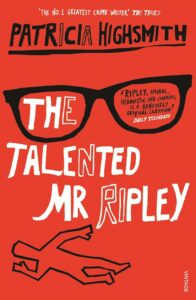
Well, it’s a masterpiece, isn’t it. Such a cruel diagnosis of a human being… and of humanity. But even though he is pure evil, you are still drawn to him, you want to know what he’s going to do next.
I have no idea if Highsmith had difficulty with the character of Ripley, but I’ve always found that villains are much easier to write than good people. Wrong ’uns are interesting; good people are boring. With my William Warwick series, I get far more letters about Miles Faulkner – a criminal mastermind who heaps misery on anyone unfortunate enough to come up against him – than I do about Warwick.
If you love a good mystery, try one of mine.
Adam & Eve — out 6 October 2026. They couldn’t make up their minds at HarperCollins whether it’s a love story or a thriller. It’s the first time in my life it has been both.
Not a Penny More, Not a Penny Less turns 50 this year — the con that launched my career. Special anniversary edition out now.
Or try my William Warwick detective series — start with Nothing Ventured — a young CID officer, a stolen Rembrandt, and the case that made his career.
Read Chapter 1 of Nothing Ventured (WW1)
See all William Warwick books
More Unputdownable lists
Top 10 Agatha Christie Books
Top 12 Classic Novels of All Time
Top 15 Films & TV shows (I couldn’t keep it to 10)
Top 12 Favourite Plays