- More
- Back

USA


If anyone tells you they know the secret of a bestseller, they are lying. If they did know, every book they wrote would be one. None of us would be having this conversation.
What I can tell you is what every bestseller I have ever read has in common. And it is one word, said to me forty-seven years ago by Peter Giddy, the great managing director of Hatchards in Piccadilly.
I had just finished Kane & Abel. I went into Hatchards and showed it to Peter. He was a man whose taste I trusted absolutely. He looked at the manuscript and he said, “Jeffrey — Kane & Abel will go to number one right across the world. It’s going to change your career.”
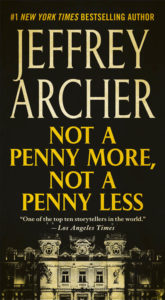
Then he looked at me again and said, “But it’s not Not a Penny More, Not a Penny Less. Not a Penny More, Not a Penny Less is original. You can’t compare it with anything else.”
That word — original — is the closest I have ever come to the secret. Not better than. Not more skilful than. Original. Different from anything else on the shelf. The reader who picks the book up has not, in any meaningful sense, read it before, even if they have been reading novels for fifty years.
Look at any film or book that has worked spectacularly in the last twenty years and you will see the pattern. The Inside Man — the Spike Lee film — has a group of men robbing a bank, and what makes it brilliant is that they make all the hostages dress up in the same tracksuits as the robbers, so when everyone comes out, you cannot be sure who is who. That is original. You actually quite like some of the robbers. You don’t want them to be caught. The film works because the idea was new.
What this means for you, the writer trying to write a bestseller, is uncomfortable. The mainstream advice is wrong. Do not study the bestseller list. Do not write the same kind of book that is currently selling. By the time your version reaches publication, the trend will have moved on, and you will be selling last year’s idea to next year’s readers. They do not want it. They want something they have not seen before.
The other thing every bestseller has — and this is the part that is harder still — is that readers tell other readers about it. A bestseller is a book that the reader closes, turns to their husband or their friend or their colleague, and says: I have to tell you about this book. You cannot manufacture pressed-on-other-readers. You can only earn it. And you earn it by writing a book that, at some point, makes the reader say: I have to tell someone about this.
NAPMNPL appeared in 1976 and did not set the world alight. Three thousand hardbacks. Modest, by any measure. But the book travelled. By 1979 it was a bestseller. By 1985 it was selling globally. The mechanic that took it there is the same mechanic that takes Where the Crawdads Sing or The Thursday Murder Club to twenty million copies today. Word of mouth. The most powerful force in publishing. And the one publishers can least control.
So if I had to put the secret in two words: be original. Then trust the readers to find you.