- More
- Back

USA


A good plot is the answer to one question, asked again and again at every level of the book: what happens next?
If your reader asks that question at the end of a sentence, you have a sentence that works. If they ask it at the end of a paragraph, you have a paragraph that works. If they ask it at the end of a chapter — and feel they cannot bear to put the book down — you have a chapter that works. The cliffhanger chapter ending is not a trick. It is the contract between writer and reader. They give you their evening. You give them a reason to turn the page.
I learned this from Alexandre Dumas. The Count of Monte Cristo is the greatest cliffhanger novel in any language. Take any chapter break in that book and look at the last paragraph. Dumas leaves you somewhere you cannot leave. A door is about to open. A name is about to be revealed. A sword is being drawn. He published the book in serial form in a newspaper, and his readers paid by the instalment. He had to make them come back next week. Every chapter ending was, in the most literal sense, a sales pitch.
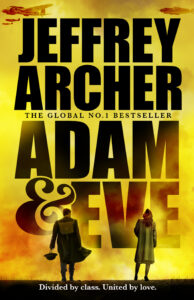
I applied the same technique in Kane and Abel. The book has eighty-one chapters. Each one ends — I hope — at a moment from which the reader cannot escape without continuing. That structure is what makes a six-hundred-page book feel as if it has been read in three days.
What else makes a good plot? Stakes the reader can feel. A protagonist they want to win. An antagonist they want to lose. Reversals — the moment when what looked like a victory turns out to be a defeat, or the other way round. And, perhaps most underrated of all, an ending that pays off the beginning. The promise made on page one must be paid by the last page.
Plot is not what happens. Plot is what makes the reader unable to stop reading what is happening.