Jeffrey's answer
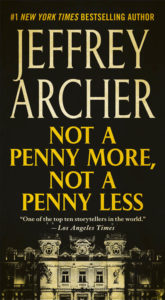
Fifteen publishers turned down Not a Penny More, Not a Penny Less.
I want you to sit with that number for a moment. Not three. Not five. Fifteen. By the eighth or ninth, I was beginning to wonder whether the people who had told me writing was a luxury for fools were right after all. By the twelfth, I was no longer sleeping properly. By the fifteenth, my agent Deborah Owen — who I will not forget if I live to be a hundred and ten — was probably the only person in the world who still believed in the book. Through every one of those rejections her line was the same: “The public will decide. Let’s get it published.”
The sixteenth was Doubleday, in America. They said yes. The seventeenth was Jonathan Cape, in Britain. They said yes too — paid £3,000 for it, printed three thousand copies. The book that fifteen publishers had told me was unsellable went on to be the foundation of everything I have written since.
What did I learn? Three things, and I will give them to you straight.
First: a rejection is not a verdict. It is the response of one specific reader on one specific Tuesday in one specific publishing house, where they may have read fifty manuscripts that week and bought none of them. The next reader, on a different Tuesday, in a different house, may say yes. The book has not changed. The reader has.
Second: nobody who has been published has not been rejected. Every novelist whose name you know has a stack of letters from publishers who said no. The difference between the writers you have heard of and the writers you have not is not talent. It is persistence — and, very often, a single agent or editor who said yes when ten others had said no.
Third — and this is the one that took me longest to learn: the worst response to rejection is to stop. The best response is to send the book to the next publisher on the list, and then to start the next book. While the manuscript is travelling, you are working. Every day you are not working is a day you are giving the rejection too much weight.
Fifteen rejections. And then one yes, and 31 novels, 95 short stories, 3 Prison Diaries and more since, across a long career.
My career as an author did not depend on the fifteen nos’ – I just had to find one yes.
A few practical notes
- A rejection is a single decision, not a verdict. The same manuscript is rejected by some agents and offered representation by others in the same week.
- Form rejections (“not for me”) tell you nothing. They are sent in volume by overworked agents. Don’t read significance into ‘not the right fit’.
- Personalised rejections are gold. Free editorial advice from a professional reader. Two agents flagging the same problem = real problem.
- Don’t argue with rejections. Never reply to defend your manuscript. The publishing industry is small.
- Track rejections in a spreadsheet. Agent name, date sent, date replied, response type. QueryTracker is a free database many writers use to manage submissions and see what other writers are reporting back from the same agents.
- Standard fiction rejection counts: 20–50 is normal for a debut. Above 50 with no requests for full manuscripts, the query letter or opening pages probably need work. Above 100 with no full requests, the book may need a fundamental rewrite.
- Keep submitting while you write the next one. A second manuscript on submission while the first is out is the strongest position. The agent who rejects book 1 sometimes signs you for book 2.