Top 10 Unputdownable Charles Dickens Novels Everyone Should Read

My ten favourite Charles Dickens novels — from Bleak House to A Christmas Carol — and why I keep coming back to them.

When Charles Dickens invited Hans Christian Andersen — the great children’s storyteller, who, sadly, or perhaps wonderfully, couldn’t even write his own name until the age of twenty-one, and fell in love with a ballerina who taught him to read and write, and thus gave us some of the great children’s stories of all time — when Dickens invited Andersen to come and spend a weekend with him in Kent, Andersen came over on what was called the packet. And he stayed for six weeks.

When he finally went home, Dickens walked his guest down to the packet to send him back to Copenhagen. He turned to his son as the ship disappeared and said: “Arguably the biggest bore I’ve ever met. But unquestionably the greatest storyteller of all time.”

I have always thought that line was the truest compliment one storyteller has ever paid another. And I have thought, ever since I first heard it, that Charles Dickens is the reason I became a storyteller, and I do not think that is an exaggeration.

***

I have always said — as you may have heard me say before — that I would rather go to my grave as the best-read storyteller alive than have another hundred million pounds. It would not mean anything to me. What would mean something is readers. Which is, in the end, the Dickens measure of success. He understood — earlier than anyone — that a novelist’s audience is not the critics; it is the public, and the public is the one worth writing for.

But you have to remember what Dickens was doing. There was no radio. No television. No phone. And on the other side of that coin: there weren’t many people in Britain who could read. Today perhaps eighty per cent of Britain is literate. In Dickens’s day, it may have been ten. So Dickens — cunning old thing, and he was cunning — went round the country reading his books aloud to people who could not yet read. And he published them in chapters. Every fortnight, a new chapter. Everybody waited for the next one. He was way ahead of his time. He was also a brilliant storyteller and a brilliant writer, which is easy to forget when you are busy being impressed by the business model.

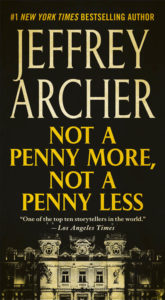
When my wife Mary took a teaching post in Cambridge after the Aquablast disaster of 1974, and I sat down to write what would become Not a Penny More, Not a Penny Less, it was Dickens I had in my head. Not his politics. Not his prose style, which no modern writer could pull off without being laughed at. His method. His belief that a novel could be large, populous, entertaining, moral and commercial all at once — and that ordinary readers, in their tens of thousands, could carry an author out of ruin.

That is what Dickens did for himself with The Pickwick Papers in 1836. It is what storytellers have been trying to copy ever since.

Dickens wrote fifteen novels. I have read them all more than once. Here are the ten I return to most often — the ones I would press on a teenager, a retiree, a reluctant reader or a seasoned one. I could not keep it to five. I tried.

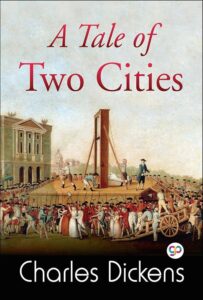
1. A Tale of Two Cities by Charles Dickens (1859)

“It was the best of times, it was the worst of times…”

The most famous opening in English literature, and rightly so.

My mother was a huge Dickens fan, and she set me off on what she considered to be his easiest novel to read — A Tale of Two Cities — which of course is a masterpiece of storytelling. My wife Mary will tell you that is exactly what it is — a masterpiece of storytelling. She will also tell you, in the next breath, that Bleak House is a masterpiece, full stop. We have agreed to disagree on the point for forty years, and I do not expect to settle it in the lifetime of this article.

Dickens tells the story of the French Revolution through the lives of two men — Charles Darnay, a French aristocrat trying to escape his family’s crimes, and Sydney Carton, a dissolute English lawyer who happens to look exactly like him. They both love the same woman. One of them will take the other’s place at the guillotine.

I loved the idea of a man sacrificing his life to allow his friend to marry the woman they both loved. Very simple theme. But not simple when handled by the genius of Charles Dickens.

It is the easiest book to read. It is a very short book compared with, say, Bleak House or Great Expectations. And it is unusual in the sense that it is a very straightforward story. It has a beginning, a middle and an end in a very straightforward way. Whenever a list is compiled of the twenty greatest novels ever written, A Tale of Two Cities tends to come top. More people have read it than have read any other book. I have no objection to it being number one, because of the Dickens books, it is my favourite.

The sacrifice at the end of this novel is the greatest ending in fiction. “It is a far, far better thing that I do, than I have ever done…” Read those last four pages aloud and try not to weep. I defy you.

I have used Sydney Carton as a mental yardstick all my writing life. When I build a character, I ask: could he or she walk up those steps? If the answer is yes, I have the makings of a novel. If no, I have not yet done the work.


A Tale of Two Cities

2. Great Expectations by Charles Dickens (1861)

Pip. Miss Havisham. Estella. Magwitch. The marshes, the convict, the stopped clocks, the rotting wedding cake.

No novel contains more iconic images than Great Expectations, and no novel asks a more important question: what happens to a boy who is given money he did not earn, by a benefactor he does not know? The answer, Dickens says quietly, is that he becomes a snob. And then — this is the novel’s gift — he learns, painfully and honestly, to become a man.

Miss Havisham is the finest portrait of wounded pride in English fiction. She has been jilted on her wedding morning, stopped the clocks, left the cake to rot, and raised her adopted daughter to break the heart of every man who approaches her. She is not a villain. She is a tragedy. Every writer who attempts a great female antagonist — and I have attempted a few — is, whether they know it or not, measuring themselves against Miss Havisham.

This is the sad Dickens. Most readers do not know it as a sad novel — because it is also the Dickens novel with the most-debated ending of his entire career. He wrote two. The first was bleak, true to the novel and true to his characters. His friend Bulwer-Lytton talked him out of it, and the version we now read is the second, gentler one. I prefer the first.

Why? Because it is harder to write an unhappy ending and keep the reader satisfied than to write a happy one — far harder. Most novelists, when they reach the end of a sad story, give the reader a small kindness in the closing pages: a reconciliation, a marriage, a redemption. Dickens, in his second ending, did exactly that. It is beautifully done. But the first ending was the braver one, and bravery, in fiction, is the thing I look for.

I love Great Expectations. I return to it more often than any Dickens reader would tell you they do. But when critics and storytellers argue about Dickens’s masterpiece, they do not land on Pip. They land on Bleak House, and I am with them. As is Mary.


Great Expectations

3. Bleak House by Charles Dickens (1853)

Bleak House is the masterpiece. Unquestionable. I have said so for years. My wife Mary, who knows Dickens better than I do, has been saying so for longer.

It is not just our opinion. Serious critics of Dickens — the real ones, the ones who do not need to be polite — have settled on Bleak House as the finest thing he ever wrote. It is an industrial marvel of a novel: a fog-bound Chancery court, a fifty-year lawsuit that has outlived its claimants, a detective (the first in English fiction — Inspector Bucket), a heroine with a disfigured face, a lawyer who is the finest portrait of a decent man in all of Dickens, and perhaps thirty other characters you will remember for the rest of your life.

The heroine is Esther Summerson. She was better than a housekeeper — she was extremely bright. She narrates half the book, with a modesty that makes her impossible not to love. The emotional core, for me, is her love story — she loves a man she is not permitted to marry, and agrees instead to marry someone else who knows she is not in love with him. It is tragic at one level, and — because this is Dickens — it all works out in the end, because it always does with Dickens. I found the resolution genuinely moving.

The character I love most is John Jarndyce. He is one of the best characters in all of Dickens. He is what everybody thinks a lawyer is. Wise, kind, self-effacing, and good — which, as any writer will tell you, is the hardest thing to write. Like Shakespeare, Dickens’s minor characters are memorable; Jarndyce is the minor character who walks away with the whole novel.

A confession: Bleak House is seven or eight hundred pages. It would never work today. But if Dickens were alive today — and he was clever and talented enough that he would have adapted — Bleak House would be 450 pages, and it would still be a masterpiece. The genius did not depend on the length. The genius found the length the era allowed.

I was a young MP when I first read Bleak House, and it left me with a lasting suspicion of anything that calls itself a “system.” Systems, in Dickens, are what crush individual people while pretending to help them. It is a lesson every legislator, banker and lawyer ought to be forced to re-learn annually.

And here again, the BBC did a remarkable adaptation. So once you have read the book, enjoy the TV courtesy of BBC iPlayer. The storytelling is truly wonderful. I have watched it three times now.


Bleak House

4. David Copperfield by Charles Dickens (1850)

Dickens’s own favourite of his novels. “Of all my books,” he wrote, “I like this the best.” I tend to trust writers on their favourites — and I know exactly why he picked this one. He picked it because he was writing about himself.

Copperfield is the most autobiographical of the novels. The blacking-factory scenes are not invented; they are remembered. The cruel stepfather is not invented; he is, more or less, Dickens’s own. The boy who escapes to London and finds his voice is the boy Dickens was. Most autobiographical novels fail because the author’s life is not interesting enough to carry a story. Dickens’s life was interesting enough to carry six. Copperfield is the one in which he gives us the truth.

What makes the book great, beyond the autobiography, is Mr Micawber. Every literary-minded person I know has, at some point in their life, been Mr Micawber — permanently expecting something to turn up, permanently broke, permanently cheerful. I certainly was, for the five years it took me to clear my debts after Aquablast. There are worse models than Micawber for getting through the dark years.


David Copperfield

5. The Artful Dodger – Oliver Twist by Charles Dickens (1837)

With Dickens, you could almost pick any major character from any book; each one is a work of genius.

I settled on Oliver Twist because of the sheer number of incredible characters. You’ve got Fagin, Bill Sikes, Mr Bumble, Nancy. And I chose the Dodger simply because of how he leaps off the page; his language, his movements. Lord knows how many versions have been made for film, stage and TV, but they have to keep on making ’em because it’s so damn good. Dickens is a hero to all storytellers!


Oliver Twist

Charles Dickens on Writing — In His Own Words

We are halfway through the ten. Before we press on to Pickwick, four things Dickens himself said about the business of writing. He was a great correspondent and a great author of prefaces, and he wrote about his craft as freely as he wrote about his characters. If you find yourself hungry to hear the man himself, start here.

“Like many fond parents, I have in my heart of hearts a favourite child. And his name is DAVID COPPERFIELD.”

— Preface to David Copperfield, 1850

Every writer with more than one novel to their name knows the truth of this. There is always a favourite child. Dickens picked Copperfield. He did not think it was his best. He thought it was closest to the bone.

“I hold my inventive capacity on the stern condition that it must master my whole life, often have complete possession of me, make its own demands upon me, and sometimes, for months together, put everything else away from me.”

— Letter to John Forster, his biographer

Read that twice. Dickens is telling us the price of the fifteen novels. There is no such thing as a great writer who is not, to some degree, possessed by the work. If you want the books, you sign the contract.

“I have great faith in the poor. To the best of my ability, I always try to present them in a favourable light to the rich.”

— Preface to Nicholas Nickleby, 1839

The reformer showing his hand. Dickens did not hide his politics from his readers. He believed that a novelist, if he had any privilege at all, had a duty to use it on behalf of those who could not answer back. Very few novelists since have said so plainly.

“There are only two styles of portrait painting — the serious and the smirk.”

— Nicholas Nickleby, chapter 10

Every writer of characters has, at some point, been guilty of one or the other. The smirking villain who never earns his menace. The solemn hero who never lets up. The great characters escape both. So did Dickens.

6. The Pickwick Papers by Charles Dickens (1836)

This is the book that made Dickens.

You have to understand the mechanics. Nobody read Pickwick as a book. It was in a magazine. Dickens published it in instalments. Every month, a new episode. And everybody followed Pickwick. Pickwick was a great hero. Everybody followed Pickwick and whatever he was doing that month. Only after the magazine run was complete did Dickens realise he could put it together as a book — and when he did, the book sold on a scale Victorian publishing had never seen.

He was twenty-four. He had been a parliamentary reporter. He was, to be blunt about it, broke. And he wrote himself out of obscurity, chapter by chapter, on monthly deadlines, because he had worked out — quicker than anyone else — how readers wanted stories delivered. He was cunning. He was cunning, and brilliant, and he was way ahead of his time.

I was thirty-four when I wrote Not a Penny More, Not a Penny Less, in not dissimilar circumstances — broke, frightened, and certain that a first novel was the only way out. Dickens at twenty-four got there faster than I did. But I understood something about him — about what desperation can produce in a writer — that I do not think I could have understood from outside. Pickwick was the book that proved a first novel could change a man’s life. He was not the last author to prove it.

Pickwick itself is a pleasure to read — ridiculous, warm, episodic, full of the kind of characters (Sam Weller, Mr Jingle, Mrs Bardell) who stay in your head for a lifetime. Read it not as a masterpiece but as the young Dickens cracking his knuckles. He got better. But he never got funnier.

If you have read Dickens before but not Pickwick, go back and meet the novel that started everything. It is funnier than you think.


The Pickwick Papers

7. Nicholas Nickleby by Charles Dickens (1839)

A young hero, a wicked uncle, a cruel schoolmaster, a beautiful heroine, a kindly patron, and a theatrical troupe. If it sounds like every Dickens novel compressed into one, that is because it rather is — but it works.

What I love about Nickleby is Wackford Squeers and the Yorkshire boarding school, Dotheboys Hall. Dickens had seen these places — schools where unwanted children were warehoused, fed poorly, and sometimes worked to death. His portrait of Squeers helped close them down. Entire schools shut within a decade of the novel’s publication. Tell me literature does not change anything.


Nicholas Nickleby

8. Little Dorrit by Charles Dickens (1857)

The novel about debt, prison and family. Dickens’s own father had been imprisoned for debt when Dickens was a child — a trauma he carried for life — and Little Dorrit is the book in which he finally metabolises it.

Amy Dorrit, born inside the Marshalsea debtors’ prison, is one of Dickens’s quietest heroines. She is not clever. She is not beautiful. She is not funny. What she is, is good — steadily, reliably good, through every misfortune. That is surprisingly hard to write. Most writers, myself included, find villains easier. Dickens wrote this novel to prove that goodness could still drive a plot, and he pulled it off.

If you have ever been in financial trouble — and I write this as someone who has — you will recognise every page of Little Dorrit. The shame. The silence. The way a family changes when the money goes. Dickens knew.

And a few words on the BBC adaptation — amazing, unmissable, a masterpiece. Read the book and then watch it on BBC iPlayer.


Little Dorrit

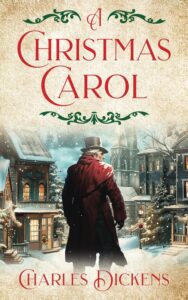
9. A Christmas Carol by Charles Dickens (1843)

Strictly speaking, it is a novella, not a novel. Strictly speaking, it should not be on this list. But if I left it off, every reader would tell me I was mad — and every reader would be right.

A Christmas Carol was never meant to be a book. It was always meant to be a pamphlet at Christmas. The great man himself said he tackled it more as something to do than intending to be a novel — and it turned out to be bigger than he had expected.

It is a wonderful story, of course, about how a wicked old thing called Scrooge won’t let Bob Cratchitt stop his work – hold your breath – on Boxing Day. None of this Friday-to-Monday only with some time off; he makes him work the whole time – he’s even reluctant to give him Christmas Day off.

And of course, the show is stolen by Tiny Tim, the son of the Bob Cratchitt – who is made to work on Boxing Day, and who is in a dreadful state.

Scrooge gets visited by three ghosts — the past, the present, and the future. When the past comes, he doesn’t give a damn. When the present comes, he just about survives. But when he sees what is going to happen to him in the future, he changes overnight.

I think I read A Christmas Carol when I was about sixteen. It was one of my mother’s favourites. My mother was a great reader; Lola, our housekeeper, was a great reader; there were always books in the house, and Christmas Carolwas one of the first grown-up books either of them pressed on me. I have re-read it most Decembers since, and I can recommend the habit.

Scrooge, three ghosts, Tiny Tim, “God bless us, every one.” You know the plot. What Dickens is doing — and the critics are right to flag it — is extreme. Very few people on earth are as bad as Ebenezer Scrooge. And nobody is as nice as Tiny Tim. The critics of Dickens have always complained that he is too romantic. But — and I say this as a storyteller — who cares? His bad is a bad, and his good is a good, and the book works. It has gone on working for a hundred and eighty years. That is not sentimentality. That is craft disguised as sentimentality, which is the hardest disguise of all.

Dickens wrote it in six weeks. He published it at his own expense because his publisher thought it would not sell. He more or less invented the modern Christmas in doing so. Our sense of what Christmas should feel like — family, generosity, forgiveness, the redemption of the hard of heart — is substantially Dickens’s invention.

I have a first edition of A Christmas Carol — the 1843 issue with the John Leech hand-coloured illustrations Dickens commissioned at his own expense. The book all but ruined his publisher and made his name. I look at it often.

It is a lovely Christmas story by one of the greatest storytellers that has ever lived.

Read it every December. I do.


A Christmas Carol

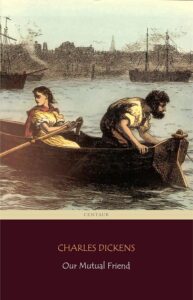
10. Our Mutual Friend by Charles Dickens (1865)

Dickens’s last completed novel, and the one I think is underrated.

A young man is presumed drowned. A rubbish-heap in London turns out to contain a fortune. A lawyer, a boatman, a schoolmaster, and a dozen other characters are drawn into a plot about money, class, identity, and what it means to appear dead. It is darker than the early Dickens. It is funnier than people remember. And the river runs through it like a character of its own.

T.S. Eliot adored this book. Henry James borrowed from it. Modern novelists keep rediscovering it. If you have read the famous Dickens novels and thought you had finished, pick up Our Mutual Friend. He kept getting better.


Our Mutual Friend

Charles Dickens for Children — Where to Start

Dickens works for children. He always has. He wrote for a Victorian public that included readers of every age, and the great characters, Pip, Oliver, Scrooge, Tiny Tim, Sam Weller, Miss Havisham, were characters children fell in love with from the first instalments. That has not changed.

If you want to bring a child into Dickens, start with A Christmas Carol. I have said above that I read it at sixteen. That is late. My grandchildren met Ebenezer Scrooge, the three ghosts and Tiny Tim years earlier than that, and it stayed with them.

The version I recommend, and the one my grandchildren Harry and Vivien loved, is the Charles Dickens Children’s Collection published by Easy Classics. It is a set of illustrated abridgements aimed at readers of six years and up. The stories are shortened without being watered down, and the characters are kept whole. Scrooge is still Scrooge. Oliver still asks for more. A child of six meets the same characters you and I did years later, in language they can follow, with pictures that pull them in.

And that is the point. These are stories that capture the imagination of any age group, because Dickens built them to. A six-year-old and a sixty-year-old can read A Christmas Carol in the same week and find something different in it. Very few writers manage that. But then Dickens is a genius and a national tresure.

So go on, read these with your child / granchild on your lap and enjoy them all over and create a wonderful memory. Then hand them the full novel when they are twelvem and maybe Bleak House when they are twenty. What joy!

Charles Dickens for GCSE and A-Level Students

If you are reading this because Dickens is on your syllabus and you have three months until the exam, one word of advice before you open the revision guide. Do not read Dickens for the exam. Read Dickens for Dickens. The exam will look after itself.

I mean it. Every student I have ever spoken to who has struggled with a set text has struggled because they were reading it as a list of themes to memorise and quotes to regurgitate. Dickens did not write it that way, and it will not read that way. He wrote it for readers. Read it as a reader. When you have finished, ask yourself what you thought of it. Then, and only then, open the revision guide.

Asa guide, here is what often appears on the syllabus, in the UK and in most Commonwealth systems, and thus where maybe you will start.

GCSE. The three Dickens novels most commonly set are A Christmas Carol, Great Expectations and Oliver Twist. All three are on the list above. A Christmas Carol is the shortest and the friendliest way in.

Read it aloud if you can, in short sittings, over a fortnight.

Great Expectations is longer and needs more patience, but Pip’s voice will carry you if you let it.

Oliver Twist is the one modern readers find hardest, because the London Dickens is describing is genuinely alien to us and Fagin is genuinely uncomfortable. Do not skip the uncomfortable parts. That is where the essay marks are.

A-Level. Great Expectations and Bleak House are the two most commonly set.

Bleak House is probably longer than any other novel on your syllabus and, I promise you, more rewarding than most. The trick is to keep going through the first hundred pages until the two narratives start to click together. From that point on, the book reads itself.

Two rules that will get you through any Dickens exam. First, really get to know your characters, not just the plot. My understanding is that examiners want to hear you talk about people, not events. Miss Havisham is a woman in a decaying wedding dress before she is a symbol of anything. Sydney Carton is a lawyer who has wasted his life and finds a way to redeem it.

Read them as people, fall lin love with them, and the essays will write themselves.

Second, when you quote Dickens, quote him from the book, not from the revision guide. Nothing shows an examiner you have done the work like a passage they can tell you found for yourself rather than the classics.

Read the book. Enjoy the book. The essay will then look after itself.

Dickens on Screen — The Best Adaptations to Watch

Dickens has been adapted more than any other English novelist. Two hundred years’ worth of films, television series, musicals, radio plays and silent shorts, and now streaming productions. Most of them are good as Dickens gave them wonderful stories. A handful are truly wonderful. Here are the ones I think might be worth your time.

Bleak House. The BBC’s 2005 adaptation, with Gillian Anderson as Lady Dedlock and Charles Dance as Tulkinghorn, is the finest television Dickens ever made. Fifteen half-hour episodes, so the plot has room to breathe. I have watched it three times. I shall watch it again. If you have read the book, this is your reward. If you have not, watch it first and read the book second. But either order works – this is a masterpiece – thank you to all involved.

Little Dorrit. The BBC’s 2008 adaptation, with Andrew Davies again on script, is also a masterpiece. Amazing, unmissable. Claire Foy is a revelation as Amy Dorrit (she will break your heart), and Tom Courtenay is the William Dorrit you were hoping for – what a fine actor. Read the book, then watch it on BBC iPlayer.

Oliver Twist. Three great screen versions, three different registers. David Lean’s 1948 film is so beautiful, and Alec Guinness’s Fagin is one of the most talked-about performances in British cinema (or at least it was in my time). Carol Reed’s 1968 musical Oliver! is joyful and boisterous (my granchildren still love it), with Ron Moody’s Fagin turning the character into a showman. Roman Polanski’s 2005 version is quieter and darker, and perhaps not for me. All three deserve their reputations, and each tells you something different about the book.

A Christmas Carol. More screen versions than any other Dickens, and perhaps half a dozen worth your time. The Alistair Sim 1951 is the classic. The 1992 Muppet Christmas Carol stayed close to the book while adding songs and Kermit and Miss Piggy are so much fun. And Michael Caine as Scrooge is probably my personal favourite – what a fine actor – a national treasure. Again with Dickens its the characters, and Sir Michael does Dickens justice and keeps the show from tipping into Muppet farce. Then there is the Robert Zemeckis’s 2009 animation, with Jim Carrey as Scrooge, is better than critics gave it credit for.

Every family finds its own version. If in doubt, start with Sim if over 18, and The Muppets if with children (or if you have the heart of a child like me).

Nicholas Nickleby. The 1980 nine-hour RSC stage production, filmed for television, with Roger Rees as Nicholas, is one of the great theatrical Dickens events of the last fifty years. If you can find a copy, watch it. Nothing else has ever caught the novel’s mixture of comedy and social outrage in quite the same way.

A Tale of Two Cities. My favourite book of all time. The 1935 MGM film with Ronald Colman as Sydney Carton is the version every subsequent Carton has been measured against. The last four minutes are unbearable. He does the book justice.

David Copperfield. Armando Iannucci’s 2019 film, with Dev Patel, was one of the great surprises of recent years. Very enjoyanble adaptation and well worth a watch.

And one last thing – Dickens Best Characters

Look back at the ten and you will notice something. The unforgettable characters, the ones who haunt the books long after the plots have faded, are very often the women. Mrs Havisham at her wedding cake. Esther Summerson narrating Bleak House. Amy Dorrit holding her family together inside a debtors’ prison. Even Estella, raised to break hearts, ends up as Pip’s only conscience.

I once wrote in a short story: “Women are naturally superior to men, and Mrs Consuelo Rosenbaum was no exception.” Dickens was brilliant at this — at being able to show you how women, held back by the age they lived in, did not stop being very cunning, very clever and very capable. They have had to wait so many years to be allowed — as in the case of my wife — to chair a national museum. Maybe her mother could have done it. Maybe her grandmother could have done it. But it was not allowed in those days.

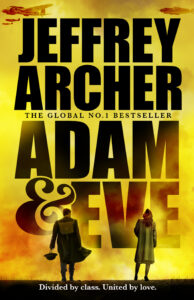
It is a thread that runs from Dickens straight through to Agatha Christie — Miss Marple, sitting in the corner of an English village, being underestimated by every man in the room until the moment she names the murderer. (I have written about Marple at length on my Top 10 Agatha Christie list.) And it is a thread that runs straight into my own forthcoming novel, Adam & Eve — where the Dowager Countess, a formidable woman, would unquestionably, if she had been born a hundred years later, have chaired one of Britain’s great companies.

Dickens saw it first. Christie carried it forward. Three centuries on, we are finally beginning to catch up.

That, more than anything else, is why he is one of the greatest storytellers that has ever lived. Not because he wrote London, or invented the modern Christmas, or sold magazines by the cartload. Because he saw people other writers did not see, and he made the world look at them too.

Read him. Start anywhere. He will not let you down.