- More
- Back
If you have read my Top 10 WW2 Historical Fiction list, the literary novels that shaped Adam & Eve, this is the companion list.
Four of them are thrillers and spy novels in the strict sense: Ken Follett, Jack Higgins, Len Deighton, and Nevil Shute’s On the Beach. These are the books that taught me how a wartime story keeps a reader up until three in the morning. The mechanics of suspense, the timing of the reveal, the moment you have to know what happens next.
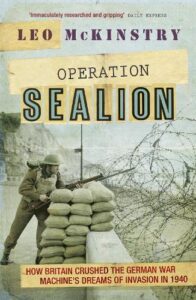
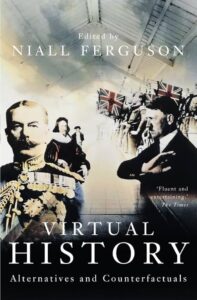
Two are histories: Leo McKinstry’s Operation Sealion, on Britain’s defences in 1940, and Niall Ferguson’s “The Kaiser’s European Union,” the counterfactual essay that sits at the deep root of Adam & Eve’s premise.
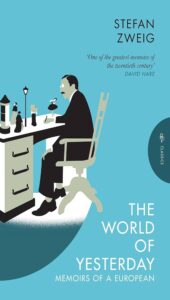
One is a memoir: Stefan Zweig’s The World of Yesterday. You know I’m a SW superfan, and this is arguably the greatest piece of writing about the Europe that Hitler destroyed.
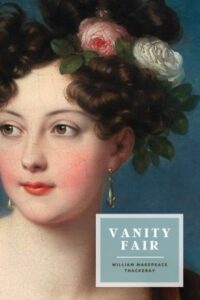
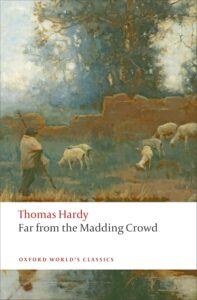
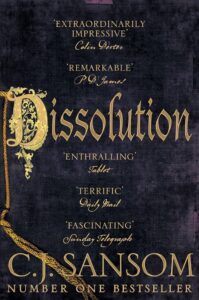
And three are classics that are not Second World War novels at all but earned their place because they shaped the class divide at the heart of Adam & Eve. Thackeray’s Vanity Fair, Hardy’s Far From the Madding Crowd, and C.J. Sansom’s Dissolution.
Ten books across two hundred years of fiction, two centuries of history, and four genres. Each one earned its place.
It’s a true classic. Although it’s been a while since I read it, but I remember it very well indeed.
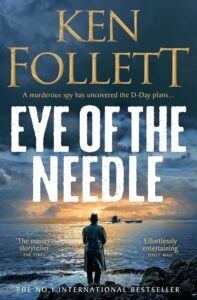
It had two titles, oddly. It was published as Storm Island in the United Kingdom before it became The Eye of the Needle, and I confess I have no idea why Ken did that, I must ask him the next time I see him. It is the book I always think of as Eye of the Needle now.
What Ken did here was take the same brave route Remarque took fifty years earlier: the German was not altogether evil. You followed him with great interest. You were interested in what he was doing. He is a spy. He is the enemy.
And yet Ken constructs the novel so that you have to follow him through London, through the countryside, onto the island where it all comes to a head. Its a very, very good book. I enjoyed it immensely.
When I was researching Adam & Eve, Eye of the Needle was one of the books I had at my elbow. Not for plot, Adam & Eve is its own story, but for tone. Ken taught me many things, including that a war novel does not have to pick a side to have a conscience.
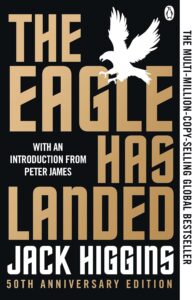
This is the thriller that made many of us look up from the page at three in the morning and say, ‘Just one more chapter.’ The premise is irresistible: a daring German plan to kidnap Winston Churchill from English soil. Higgins tells it with such confidence that, within minutes, you believe it could have happened.
The commandos are led by Kurt Steiner, a professional soldier with a code of honour, and aided by Liam Devlin, an Irishman whose loyalties are complicated. Those two characters are what drive the book: opposites who recognise something in each other, even as they walk toward disaster. On the English side, the net tightens slowly and steadily, and the quiet village setting hides the sharp edge of espionage behind its hedgerows and churchyards.
What I enjoy is the moral ambiguity. Higgins never forgets who the enemy is, but he understands that courage can be found in the wrong uniform. That makes the suspense sharper, because you are not only worried about who will win; you are worried about who will live.
The book reminded me that thrillers and historical novels share the same duty, which is to make events feel immediate. If you want to understand why wartime stories still grip us, start here.
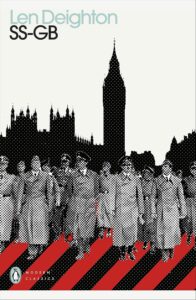
Alternate history is a dangerous game. Get it wrong and it becomes a gimmick. Deighton gets it right by making the nightmare plausible. In his version of 1941, Britain has been occupied, the swastika hangs over London, and daily life continues under a new set of rules enforced by fear.
At the centre is Detective Superintendent Douglas Archer, a man trying to do his job while everything he believes in has been confiscated. I liked Archer because he is practical. He is not out to save the world; he is trying to keep a measure of law in a country where the law has been hijacked.
Deighton understands systems: police work, bureaucracy, collaboration, resistance, and he understands how quickly people adapt. You can feel the slow corrosion of normality, and the way compromise is presented as necessity.
And I should confess a personal bias: I am a real fan of Len Deighton’s Bernard Samson books as well, a later era, certainly, but the same cool intelligence at work. SS-GB is a warning as much as a thriller, and it makes you turn the page like your life depends on it. It was also a direct inspiration for Adam & Eve: I wanted to explore that same question of what happens to ordinary people when the world they know is turned upside down.
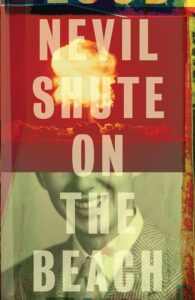
An amazing story of how the world is going to come to an end.
That is how I remember it, and that is what Shute wrote it to be. On the Beach arrived seven years after A Town Like Alice, and it is a profoundly different book. Set in Melbourne in the years following a nuclear war in the Northern Hemisphere, it is the story of the last people on earth. The radiation is drifting south. There are weeks left, then days. An American submarine commander, an Australian naval officer, a young woman who has spent her short life drinking too much and sleeping too little, Shute follows them through the time they have, and what they choose to do with it.
It is not a Second World War novel. It is the novel that asks what the next war would mean, written by a man who had lived through the last one. And that question, what is at stake when civilisations get the calculation wrong, is the question I kept asking myself while I was writing Adam & Eve. The Second World War was the one Britain very nearly lost. Shute’s nuclear war is the one humanity could not survive. The same writer, fifteen years apart, asking the same thing in two different keys.
For Adam & Eve, On the Beach sat in my mind as a warning. Shute’s earlier novel A Town Like Alice taught me how to write the long aftermath of catastrophe. On the Beach taught me what catastrophe averted looks like, by showing me one that wasn’t.
This is the non-fiction entry on the list that made me sit up straight and rethink several chapters of Adam & Eve. McKinstry tells the story of Britain’s preparations to resist a German invasion in the summer of 1940, and he demolishes the comfortable myth that the country was saved solely by the heroic few of the RAF.
The truth, as McKinstry shows, is more complex and more impressive. The Home Guard were not the bumbling amateurs of television comedy. The Royal Navy was a formidable deterrent. Churchill’s government was ruthless, organised, and prepared to fight on the beaches in ways that would have shocked the public.
What gripped me was the detail: the plans for burning the sea with petroleum, the capture of German spies, the chilling blueprints the Nazis had drawn up for an occupied Britain, including the deportation of millions and forced breeding programmes. McKinstry writes history with the pace of a thriller, and his research is impeccable.
For Adam & Eve, this book was essential background. It reminded me that the line between survival and catastrophe was far thinner than most people realise, and was the biggest single inspiration for the thriller storyline in Adam& Eve.
A historian, in my experience, comes in two varieties: those who tell you what happened, and those who ask what else might have happened. Niall Ferguson belongs firmly to the second, and “The Kaiser’s European Union” is the essay of his I have returned to most often while writing Adam & Eve.
The argument runs like this. If Britain had stayed out of the First World War in August 1914, if Sir Edward Grey had held his nerve, if the Cabinet had split differently, if public opinion had gone another way, Germany would almost certainly have won a short continental war against France and Russia. What would have followed, Ferguson suggests, is not the monstrous Third Reich my characters grow up under. It is something altogether stranger: a dominant Kaiserreich presiding over an economic bloc that looks remarkably like the European Union we know today. No Versailles. No Weimar. No Hitler. No Second World War.
I do not say Ferguson is right. I say the essay forces you to consider how thin the margin was. A shepherd’s son and an Earl’s daughter born on Armistice Day 1918 inherit a world shaped by a single decision taken in a single cabinet room four years earlier. That is the soil Adam & Eve grows in, and Ferguson helped me feel it.
What I admire about him as a writer, is the refusal to hedge. He makes a case, cites the evidence, and lets you disagree.
A novelist cannot get away with that kind of directness, but a historian can, and I found it bracing every time I returned to the page.
Read the essay first; if it grips you, Virtual History as a whole is worth the time.
Ferguson shows that the best historians, like the best novelists, are the ones who never stop asking “what if.”
A memoir, not a novel. The one non-fiction book on the A&E list, and the book I am most insistent every reader should discover.
Stefan Zweig was an Austrian Jew, a novelist, a biographer, a memoirist of the Habsburg Europe that Hitler destroyed.
He is arguably the greatest author I have ever read.
David Young, Lord Young, the great advisor to Margaret Thatcher, told me he thought The World of Yesterday was arguably the greatest piece of writing he had ever read. I would not go quite that far, but I would not argue hard against it either. It is a work of genius, and Zweig should have won the Nobel Prize.
He wrote only two novels, but he wrote several novellas, and if you have never read them you should rush to the shops now. Amok. Fear. Letter from an Unknown Lady. The Chess Story, which I have put on my forthcoming Thriller list and will say more about there.
I have read Amok five times. I read it while I am writing. I’ve read Amok five times. It is to remind me how pathetic and feeble I am.
The tragedy of Zweig, and this is the tragedy that saturates The World of Yesterday, is that he did not survive the war he was writing about. He and his second wife committed suicide in Brazil in 1942, having concluded that Hitler was going to win. He was wrong about that, and the world had to manage without him, and I think it has managed less well than it would have done.
Read him. You will find in Zweig a civilisation Europe lost, and the writer who mourned it better than anyone.
You may wonder what a Victorian novel is doing on a list of books that inspired a Second World War story. The answer is simple: Becky Sharp.
Thackeray created one of the great characters in English literature, a woman of no fortune, ferocious intelligence, and limitless ambition who refuses to accept the place society has assigned her. She lies, she charms, she schemes, and she survives. She is also, I confess, tremendous fun.
What Vanity Fair taught me, and what I carried into Adam & Eve, is how to write about class. Thackeray understood that the English class system traps people as surely as any locked door. His novel follows two women, Becky and Amelia, through the upheavals of the Napoleonic Wars, and shows how birth, money, and manners determine who rises and who falls. The parallels with my own story, a shepherd’s son and an Earl’s daughter, were ones I could not miss.
Thackeray also taught me the value of a narrator with opinions. He does not stand back; he comments, judges, teases, and occasionally breaks your heart. That voice gave me permission to be present in my own storytelling.
Hardy’s Wessex is a world of sheep farms, seasonal rhythms, and passions that burn as fiercely as anything in a London drawing room. Gabriel Oak, the shepherd who loves Bathsheba Everdene with a patience that borders on the heroic, is one of the great figures in English fiction, and he was very much in my mind when I was creating Adam.
What Hardy understands, and what many novelists forget, is that rural life is not simple. It is hard, proud, and shaped by forces, weather, class, chance, that no amount of cleverness can control. Bathsheba is headstrong and brilliant; Oak is steady and true. The tension between them runs deeper than romance. It is a collision of temperaments, and Hardy lets it play out across years.
I also love the landscape. Hardy writes the English countryside as though it were a character, moody, beautiful, and occasionally merciless. That sense of place, of a life rooted in soil and season, was something I wanted for the early chapters of Adam & Eve, before the war uproots everything.
If you have not read Hardy since school, go back. You will find more there than you remembered.
Sansom wrote about the Tudor period, and later, in the Shardlake series beginning with Dissolution, the reign of Henry VIII. He wrote with the kind of historical precision that puts most of us to shame.
His hero was a hunchbacked lawyer who took his cases, and his conscience, through the dangerous courts of the Tudor age. It is not the period A&E is set in. But the moral weight, a good man trying to behave well in a time that punishes decency, is wonderful and keeps you turning the page.
He’s among the best I’ve ever read.
Sansom died in 2024. We lost one of the finest historical novelists of his generation, and I miss the books he did not live to write.
If you like historical fiction with genuine accuracy and damn good storytelling, and I have never understood why anyone would want historical fiction without both, you will not find a finer practitioner and example of the form.
If you have discovered the ten WW2 historical fiction novels that shaped Adam & Eve, and the ten thrillers, histories and classics in the list above, you have the part of library that lived in my head while I wrote my final novel. Forty years of reading, twenty books that mattered most (yes there were more).
The work of every writer above is, in some small way, part of the work I am about to send out into the world.
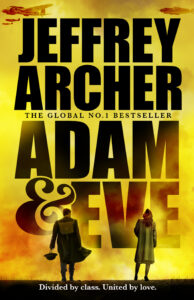
Adam & Eve arrives 6 October 2026.
Two children born on the same day, Armistice Day 1918, whose lives will be shaped by the gathering storm of the Second World War.
A shepherd’s son and an Earl’s daughter. Divided by class. United by love – as the marketing blurb says.
It is my final novel, and I hope you enjoy it.