- More
- Back
I have loved heist stories all my life.
The con artist, who was the subject of my Top 10 Con Artist Books, lives by deception. He talks his way into your wallet, your trust, your confidence. The heist man lives by something different. The heist is craft. It is preparation, timing, nerve, and when the job goes well, a kind of strange beauty. You watch a heist unfold the way you watch a Swiss watch. Gear by gear, click by click, nothing wasted.
Originality is the test. Every great heist novel has, at its centre, a new idea. Take Inside Man, the cinema example I always reach for. The idea of a group of people raiding a bank, then making everyone in the bank dress up in tracksuit outfits, and then dressing themselves in the same outfit. So when they all come out, you cannot be sure who the goodies are and who the baddies are. It is played with such distinction that you actually quite like some of the baddies. You don’t actually want them to be caught. That same problem again, you are following the criminal. But what made it work was the originality.
The ten books that follow are, in my view, the finest heist novels, capers and great cons ever written. Some are foundational classics. Some are modern. One is so charmingly unlikely that calling it a heist would make a Frenchman laugh. One is so much older than the rest that the word heist was not yet in use. They are all here because each found, in its own way, a new way in.
A word on companion reading. My Top 10 Con Artist Books, Highsmith and Bad Blood and Catch Me If You Can and the Aquablast story I would rather forget, is the sister list to this one. The two do not overlap. If you have just finished one, the other is waiting for you.
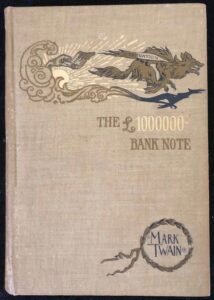
The Million Pound Bank-Note is a wonderful story. Two wicked old men have a bet that they produce a million pound note with the approval of the Bank of England, and they find a very bright man who’s out of work. They give him the million-pound note. Sounds wonderful, until he tries to spend it. But of course he can’t. And he gets himself into a lot of trouble, a lot of debt, and falls in love before the two men return. Great fun from beginning to end.
Mark Twain, of course, a genius. His ability, his short stories are probably better than his novels, and his quips are probably better than his short stories. In fact, his wonderful comment about, at the age of 16, I thought my parents knew nothing, and at the age of 20, I was shocked to discover how much they’d picked up in the last four years. Brilliant.
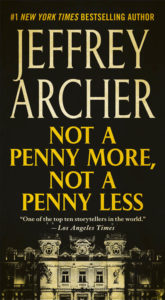
I have one final reason for putting this novella on a heist list, and it is personal. The premise, that the appearance of wealth functions exactly as wealth itself, is a lesson I had occasion to learn the hard way, in 1974, when a vice-president at the Bank of Boston walked into my life with a confident manner and a story about a company called Aquablast. I believed him. I performed almost no due diligence. He took me for everything I had. The Twain novella turned out to be, in a sense, my own story. The only difference is that out of the wreckage Twain wrote a charming entertainment, and out of mine I wrote Not a Penny More, Not a Penny Less. It is the reason this list exists at all.
Available from AmazonApple BooksAudibleBookshopKindle
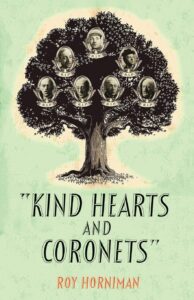
Kind Hearts and Coronets is ageless. It’s one of those films that you could turn it on this afternoon and you’ll laugh just as much as I did 50 years ago. It’s a genius of an idea.
The novel itself was written in 1907, by a forgotten Edwardian called Roy Horniman, under the darker title Israel Rank. The 1949 Ealing Studios film, retitled Kind Hearts and Coronets, is what made it immortal, and it is the version most readers come to first.
A young Italian, and of course in those days in Britain, Italians were thought to not be quite all right, a bit spivvy, discovers he’s eighth in line to an earldom. And they don’t acknowledge him. They don’t even admit he exists, because he works in a shop. A disgraceful thing. So he decides he will kill the seven people who are stopping him becoming an Earl.
All seven parts are played by the remarkable Alec Guinness, arguably the greatest film actor of his day, whereas Olivier was unquestionably the greatest, perhaps with John Gielgud, the two greatest stage actors of their day.
He plays the Bishop. He plays the Earl. He plays a great successful banker. He plays a businessman. He plays a wastrel. He plays every single part. And the Italian kills him off one by one. But a woman gets in the way. In fact, two women get in the way, and they mess things up. One of the best films I’ve ever seen.
Available from AmazonApple BooksAudibleBookshopKindle
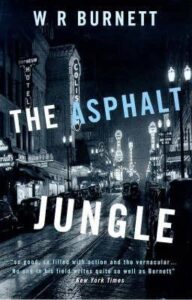
This is the book that more or less invented the modern American heist novel. Burnett gave us the convention I now take for granted. A team of specialists, each with one skill, brought together by a boss for a single job, and the slow, queasy unravelling of the plan as the human weaknesses of the men involved catch up with the precision of the scheme. Every American heist novel written since owes it something.
What Burnett understood, ahead of his time, was that the pleasure of a heist story is the men. The diamonds are an excuse. The team is the point. John Huston filmed it the year after publication and the film is famous, but the novel is leaner and harder, and it is the place to start.
Available from AmazonApple BooksBookshopKindle
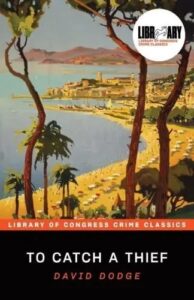
Hitchcock filmed it three years after publication, with Cary Grant and Grace Kelly, and the result is one of the most beautiful films ever made. Hitchcock was directed by one of the all-time greats, and let me say something I have always believed. It is a disgrace that he never won a competitive Oscar. They gave him an honorary one in 1968 and called it square. It was not.
The job, in both book and film, is the work of a retired American jewel thief living quietly on the French Riviera, who is forced to come out of retirement when a copycat begins striking the great houses of the Côte d’Azur and every gendarme on the Mediterranean coast knows where to look first.
What makes it sing, what made me put it on this list, is that we have another villain we want to win. Cary Grant in that film is so unbelievably good-looking that you find yourself wanting him to win, half the time, before you have even worked out whether he has done anything wrong. That is what a heist novelist is reaching for when he sits down to write. The reader on the side of the criminal. Dodge wrote it. Hitchcock filmed it. Both of them got there.
Available from Apple BooksAudibleBookshopKindle
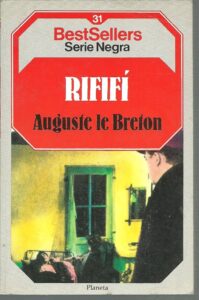
The French invented the silent heist, and Rififi is where they did it. Le Breton, an ex-criminal himself, wrote with an authenticity that no one else in 1953 could match. The novel, and the Jules Dassin film that followed, gave us the half-hour silent jewel-shop sequence that every heist film for seventy years has tried to better, and almost none has matched.
The vocabulary alone is a small education. Rififi is Parisian underworld slang, untranslatable in any tidy way, meaning roughly “trouble between thieves.” The book is about exactly that. A perfect job, a perfect crew, and then, as always, the men.
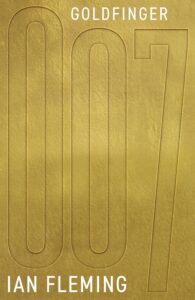
When I was a young man, just before I went up to Oxford, I was in a store in Lymington in Hampshire, and I saw this book for sixpence, second-hand, called Goldfinger. That was my first introduction to Ian Fleming. Wow, did I love it.
I loved his hero. I loved his villains. His villains were wonderful. Goldfinger was absolutely wonderful. Oddjob was the worst, wasn’t he? You were just fascinated by him. Great storyteller. Genuinely original.
The book turns on robbing the gold reserve at Fort Knox. So big, so impossible, so American, that for years afterwards every thriller writer tried to copy the scale and not one quite managed. The film, of course, made the rest of the world fall in love with it. The book got there first.
Bond, of course, has survived. I was seventeen at the time. Bond has survived. Here we are nearly seventy years later, and they are discussing in The Times this morning who will be the new Bond. That’s what I call surviving.
Available from AmazonApple BooksAudibleBookshopKindle
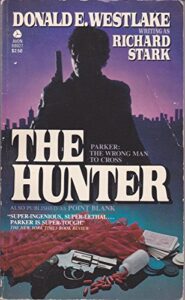
Donald Westlake wrote his comic heist novels, The Hot Rock and the rest of the Dortmunder series, under his own name. Under the Stark pseudonym, he wrote a different kind of book entirely. The Parker novels, twenty-four of them across forty-five years, all about a single professional thief who is essentially a machine made of resentment and competence.
The Hunter is the first, and the cleanest. Parker has been double-crossed and left for dead. He comes back to take what he is owed, not a penny more, and not a penny less, you might say. The prose is so spare you could cut yourself on it. Westlake wrote nothing finer, under any name, and I wish I had written it myself.
Available from AmazonApple BooksBookshopKindle
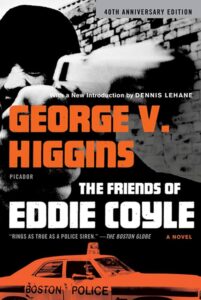
Higgins was a federal prosecutor in Boston who had spent his career listening to criminals talk. When he sat down to write a novel, he wrote it almost entirely in dialogue, and the dialogue is so good that no American crime writer of the last fifty years, including Elmore Leonard, has ever quite stopped admiring it.
Eddie Coyle is a small-time gun-runner squeezed between the men who supply him and the federal agent leaning on him to inform. The heists in the book, bank robberies executed by Eddie’s clients, are technical, plausible, and frighteningly ordinary. There is no glamour anywhere. There is only Boston, and the rain, and men talking themselves into prison. It may be the most influential American crime novel of its decade.
Available from AmazonApple BooksAudibleBookshopKindle
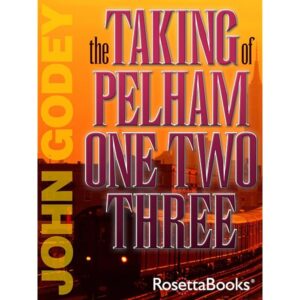
This is one of my favourites on the list. What I like about Pelham 123 is the train is always moving, so you feel the tension of movement and action. And you realise, of course, that Walter Matthau is the good guy, and he is trying to solve the problem.
What fascinated me was how many angles you saw it at. You saw it from someone on the platform. You saw it from someone in the train. But most of all, I enjoyed seeing it from the headquarters, where the work’s being done on different television screens. And while they are impotent at one level, because all they can do is press buttons and watch, it didn’t take away from the tension. It added to it.
Making it a very, very exciting denouement, where you discover the bad guy isn’t quite as bad as you thought.
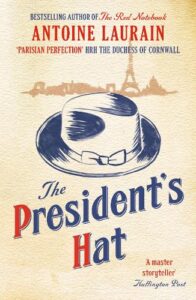
I much enjoyed The President’s Hat. Such a simple idea. A normal guy goes into a restaurant, and he is shocked when he discovers the President of France, Mitterrand, comes in and sits at the next table, puts his hat on the top, and leaves without it. So this man steals the hat. And what you do is, you follow the hat. That is such a clever idea. Until it ends up back with the President of France.
It is the smallest possible heist with the largest possible consequences. The thief takes nothing of value, technically, and yet the hat carries with it the gravity of a presidency. Every person who wears it next is changed by it. In a list of bank vaults and gold bullion, this is the heist that makes you smile.
Simple story. Simple idea. Great fun. And it worked. That, in the end, is what I want from any heist novel.
Available from AmazonApple MusicAudibleBookshopKindle