Jeffrey's answer
Fourteen. Fifteen. More if it needs them.
I always say to young authors when they come to see me: it’s damned hard work. Every novel I have written for fifty years has gone through fourteen or fifteen drafts. Some have needed more — Kane & Abel went to eighteen, and Adam & Eve, my final novel, has gone to twenty. Twenty drafts of one book. And only when I was satisfied did I hand it in.
The first three drafts are about discovering what the book is. The middle four are about making the story work. The last seven, eight, ten are about making the prose work — sentence by sentence, line by line, until I cannot find anything further to improve. Then I hand the manuscript to my editor, and we begin again.
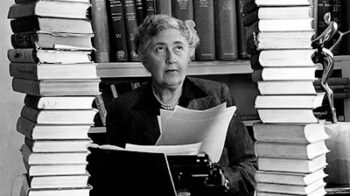
As i have said before, Sir Matthew Pritchard, Agatha Christie’s grandson told me he was suprised I had only done sixteen drafts.
What it taught me was simple. If you want to be the best you can be, even if well below Charles Dickens, or Agatha Christie — you have got to do the work, you have got to work damn hard. And my comparison is to athletics, and sport. You just have to out work (or out train) the next athlete or author. If you don one draft and hand it in, then don’t bother.
Many first-time novelists rewrite three or four times and submit. The novel is rejected. They are baffled — they have rewritten it. But three or four drafts is, in my experience, where the discovery happens. The book that you submit at draft four is the book the writer wanted to write. The book at draft fourteen is the book the reader wants to read. Those are not the same book.
If you take only one piece of advice from this column, take this one. Write the draft. Then write it again. Then write it again. Then keep going.
The published novel is what is left after you have refused to stop.
A few practical notes
- Minimum for a saleable manuscript: 4–6 drafts. Anything below this is almost always rejected. The first draft is for you. Drafts 2–4 make it readable. Drafts 5–6 make it sellable – but as above, for me it takes 18 drafts.
- What each draft does. Draft 1 — discover the book. Draft 2 — fix structure. Draft 3 — fix prose at sentence level. Draft 4 — beta readers. Draft 5 — incorporate feedback. Draft 6 — final polish.
- Take time off between drafts. Two weeks minimum. The book reads differently after distance. Mistakes you couldn’t see become obvious.
- Print and read a hard copy at least once. On-screen reading misses errors the eye catches on paper.
- Read aloud at least once. Awkward sentences become audible. If you stumble on a line, the reader will too.
- Use a beta reader before submitting. Someone who reads in your genre, not your spouse. Three beta readers is the sweet spot.
Stop drafting when you’re polishing without improving. Jeffrey’s 14 drafts are unusual; most novelists ship at 6.