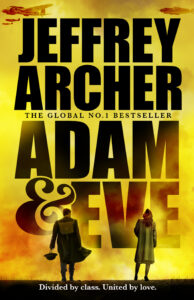
Jeffrey Archer’s Top 10 WW2 Historical Fiction Novels That Shaped Adam & Eve

It is a love story and a thriller. I didn’t mean to do that. That is the way the pen moved.

If Hitler had allowed the Panzer Division to attack Dunkirk that night, the Germans might well have invaded England, and we might well have lost the war.

I have just completed what I think is the finest novel, perhaps the best thing I have ever done in my life, Adam & Eve. In the end the readers will decide, but it certainly took the biggest effort and longest time to deliver.

At the start, I had two ideas, and the problem was linking them together.

The first came after reading an excellent military book by Andrew Roberts, the distinguished academic and historian. What if, on 15 September 1940, Hitler changed his mind three times. I thought: what if he changed his mind only twice? The world would be a very different place.

Then I had the second idea. Two children born on the last day of the First World War, 11 November 1918. A daughter to an Earl, and he wanted a son. A son to a shepherd, and he wanted a daughter.

You will follow their lives from the age of nought through to 15 September 1940. But my problem was, how do I link the two together?

It was late on in the book that I saw how they could get Hitler to change his mind a third time. And that, I do not have any hesitation in saying, was the middle of the night, four o’clock in the morning, and the best idea I have ever had.

To tell their story, I had to go back and read the books that taught me what it feels like to live through history, not merely study it.

But I needed more than facts, what 1940 sounded like, what it felt like. No amount of archival research can give you that. Only other writers can.

The ten novels on this list gave me this knowledge and inspiration. They are all set in or around the Second World War. All share a quality I prize above almost any other. They make you turn the page. They are, in a word, unputdownable.

A great war novel has to do two jobs. It must respect the facts, the dates, the battles, the politics, and it must also give you the private truth and personal stories. What it was like to queue for bread, to listen to a forbidden broadcast, to fall in love behind blackout curtains, or to discover that the neighbour you trusted is a traitor.

The novels below are the ten I relied on while writing Adam & Eve. There is a companion list compiled of a mix of WW2 thrillers, spy novels and classic companion reads.

Both lists were part of my research and inspiration for the same story, Adam & Eve.

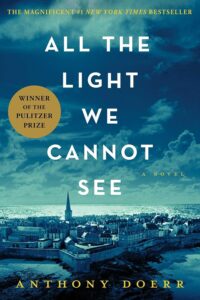
1. All The Light We Cannot See by Anthony Doerr (2014)

All the Light We Cannot See is genius, of course. With all great books that transcend the year and then survive even beyond it, it has, to quote the great Peter Giddy of Hatchards, to be original. And that book is original.

You play with a blind girl, a very bright blind girl, and a man who finds her. You play the relationship between the two during the last days of the World War. With that wonderful opening of a man being killed because he won’t tell the German officer where this girl is.

What I admired most is the tenderness. Even inside a story of occupation, brutality, and bombing, Doerr is fascinated by kindness: a father carving a model city so his blind daughter can navigate; the wonder of a single radio transmission travelling through darkness. It reminded me that technology can be used to control people, and to connect them (sadly still the same today) and that every war is also a battle over what we choose to listen to.

It is, I say to you, quite simply, the great stories, the ones that survive, are original.


A stack of WW2 historical fiction novels that inspired Jeffrey Archer’s Adam & Eve

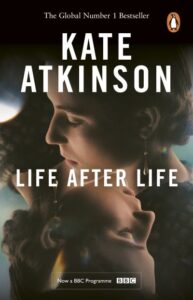
2. Life After Life by Kate Atkinson (2013)

This is a wartime novel with a twist so ingenious that, after a few chapters, you stop thinking of it as a trick and start thinking of it as truth. Ursula Todd is born in 1910, and then she dies. And then she is born again, and again, living variations of a life that keeps colliding with the same historical storms: the interwar years, the Blitz, the long shadow of fascism.

Atkinson’s great achievement is that she makes repetition feel suspenseful. Each new life is a different angle of attack on the same question. How much of our fate is choice, and how much is circumstance? Ursula is surrounded by a family you come to know in all their strengths and irritations, which gives the novel its warmth; then the war arrives and tests every bond.

I found myself particularly fond of the scenes in wartime London, the blackout, the rubble, the small routines that keep people sane. The book taught me, again, that history turns on ordinary moments: who you meet, which street you take, what you say in a room when a bomb falls. It is clever, yes, but it is also moving, and that is the harder feat.

For Adam & Eve, Atkinson helped me see that the same life can fork in a dozen directions depending on a single decision, and that the reader will stay with you if the emotional stakes are real.


Life After Life

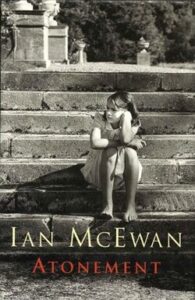
3. Atonement by Ian McEwan (2001)

Ian McEwan is a genius. He really is. I was absolutely blown away by the quality of the writing in this book, by the precision of every sentence, the beauty of every observation. He is one of the finest English novelists of his generation, and rightly knighted.

What McEwan does in Atonement, and what made me put the book on this list, is the Dunkirk section in the middle of the novel. The retreat across northern France in 1940. Robbie Turner walking, half-injured, towards the beaches. McEwan describes it with a clarity I have come back to again and again, and which inspired me when I was writing my own Dunkirk scene in Adam & Eve. I shall be honest. I was perhaps even more inspired by the recent Christopher Nolan film, which I watched so I could really visualise the place, the noise, the queues, the shapes against the sea. But the writing is McEwan’s, and the writing is the foundation.

In any book like this, you will require to do research. If you are going to write a story about what happened on the 15th of September, 1940, you have to do a great deal of research about what Britain was like between the wars, during the war, and what was going on. And Dunkirk was a major feature.

The fact that 400,000 of our soldiers were stranded on a Flanders beach. While the 1st Panzer Division were only 10 miles away and being ordered by Hitler to stay still, to this day, 2026, we don’t know why Hitler made one of the most powerful fighting brigades on earth remain 10 miles away from Flanders.

Nevertheless, Churchill went on the radio and said, “We need to get our boys back.” And in one of the most dramatic saves in history, boats set out from all over the south of England. Paddle steamers, yachts, rowing boats, fishing boats, even cruisers and frigates, set off for Dunkirk to pick those men up. They got most of them back, and made it possible for us to survive and go on to win the war.

If Hitler had allowed the Panzer Division to attack Dunkirk that night, the Germans might well have invaded England, and we might well have lost the war.

That was the challenge in Adam & Eve. How did I make Adam & Eve involved in the whole process?

That is the emotion I wanted to capture. McEwan, in Atonement, captured it first.


Atonement

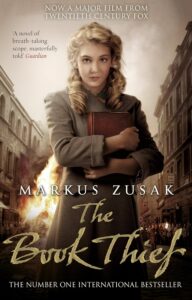
4. The Book Thief by Markus Zusak (2005)

I do remember The Book Thief. I read it perhaps ten years ago. It was very touching, the way the books were banned by Hitler, but she went on stealing them and reading them. That was very easy to believe. I had a feeling, when I read it: this is a true story. As often the best ones are.

That instinct, that the most powerful wartime fiction reads as testimony rather than invention, was something I carried with me into Adam & Eve. Liesel Meminger’s belief that words can be weapons and lifelines in equal measure runs through Zusak’s masterpiece, and it runs through mine.


The Book Thief

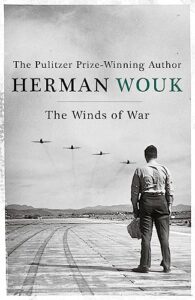
5. The Winds of War by Herman Wouk (1971)

Some novels have scope; this one has a horizon. Wouk takes you into the years leading up to America’s entry into the Second World War, and he does it through a cast that feels both fictional and strangely real. At the centre is Victor ‘Pug’ Henry, a naval officer who moves through the corridors of power, present when history is being decided.

The Henry family are pulled in different directions. Byron, the son, is drawn toward Europe and danger; Natalie Jastrow, a character of great intelligence and feeling, becomes caught in the machinery of persecution. Around them, real figures appear, reminding you that these private lives are happening inside public catastrophe.

Wouk is wonderfully clear about the stakes. You see how democracies argue, how dictators exploit hesitation, and how quickly a nation can be pulled from peace into war. Yet it is never dry. The novel keeps the tension of a thriller because the characters are always one voyage, one meeting, one decision away from disaster.

Adam & Eve owes a great debt to The Winds of War. Wouk showed me that a novel can carry the weight of history on its shoulders and still move like a thoroughbred.


The Winds of War

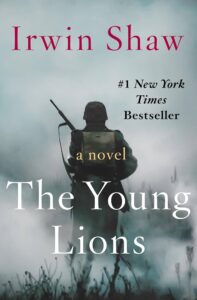
6. The Young Lions by Irwin Shaw (1948)

Shaw does not offer comfort, and that is precisely why this novel endures. He follows three very different men through the war: Christian Diestl, an Austrian seduced by Nazism; Noah Ackerman, a Jewish American who experiences both combat and prejudice; and Michael Whitacre, an actor who wants glory and finds something far messier.

What impressed me is the psychological honesty. Shaw shows how ideology can feel like rescue to a young man with no prospects, and how easily that rescue turns into complicity. He also shows the cruelty inside supposedly noble institutions: the bullying, the casual antisemitism, the humiliations that chip away at a person’s sense of worth.

The battles are vivid, but the real tension is moral. You keep asking yourself: what would I do? When would I refuse? The novel refuses easy answers.

The characters stay with you, particularly Noah, who has to fight on two fronts, against the enemy and against the ignorance of his own side. Writing Adam & Eve, I kept Shaw’s lesson close. War is a clash of values, and it gets tested in the smallest moments as often as the largest.


The Young Lions
title=”YouTube video player” frameborder=”0″ allow=”accelerometer; autoplay; clipboard-write; encrypted-media; gyroscope; picture-in-picture; web-share” allowfullscreen>

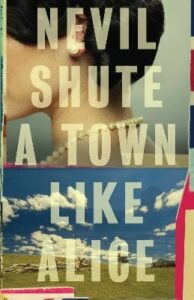
7. A Town Like Alice by Nevil Shute (1950)

A Town Like Alice was one of the first what I call grown-up books I read. I was very moved by it. It was one of the bestsellers throughout the world.

The novel comes in two halves. The first is wartime Malaya, 1942, Jean Paget and a group of British women and children captured by the Japanese in the fall of Singapore, and forced on a march from village to village along the peninsula because no Japanese commander wants the responsibility of holding them. Hundreds of miles, six months, a quarter of them dead by the end. On the road, Jean meets a captured Australian soldier, Joe Harman, who steals chickens for the women and pays a terrible price for it. The second half, without spoiling, is the long, careful work of Jean’s life after the war, and her search for Joe.

In the film, Peter Finch and Virginia McKenna played the love element, realising how little time they had left together. Beautifully written, a magnificent book. Set in Australia. So I suppose it was my first look at Australia, my first feel for that great continent, and it has remained in my memory 60 years later.

What Shute understood, and what every writer working in this territory has had to learn, is that the reader will follow you anywhere if the human stakes are real. He does not lecture you about the war. He does not flinch from it either. He shows you a young woman walking, and a young man helping, and what it costs both of them, and what they do afterwards. That is enough.

For Adam & Eve, Shute reminded me of the discipline of plain writing. When you are dealing with material this big, the temptation is to dress it up. The masters know to leave it bare.


A Town Like Alice
title=”YouTube video player” frameborder=”0″ allow=”accelerometer; autoplay; clipboard-write; encrypted-media; gyroscope; picture-in-picture; web-share” allowfullscreen>

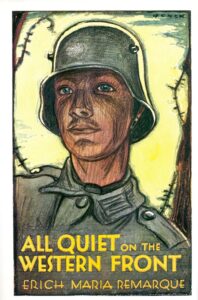
8. All Quiet on the Western Front by Erich Maria Remarque (1928)

In the UK, we’re used to seeing the Great War through the eyes of the Allied Forces, but Remarque’s novel tells the story of a German private on the front line. It’s a very moving account of the deprivation and hardship he goes through, and reminds us that innocent people on both sides were thrown into uniform and ordered to fight. Whether they liked it or not!

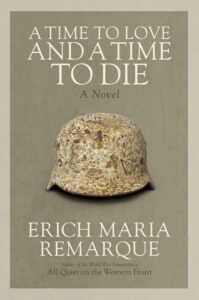
Remarque went on to write A Time to Love and A Time to Die about a German soldier falling in love with a French girl and, again, he does it with great empathy. As a writer, it’s hard to say which books influence you and which don’t, but I certainly hope Remarque has had an effect on how and why I write.


All Quiet on the Western Front

9. A Time to Love and a Time to Die by Erich Maria Remarque (1954)

If All Quiet on the Western Front is about the war that made the twentieth century, this is its mirror image: a novel about the war that nearly destroyed it. Remarque returned to the battlefield, this time on the Eastern Front of the Second World War, and produced something equally devastating.

Ernst Graeber is a German soldier on leave from the Russian front. He returns to a homeland that has been bombed, brutalised, and hollowed out by the regime he serves. In the wreckage, he finds love, and the terrible knowledge that it cannot last.

What I admired is the honesty about the German experience. This is not a novel that excuses or forgives. It insists on seeing the human being inside the uniform. Graeber is not a hero. He is a man trying to hold on to decency in a world that punishes it. That is a kind of courage, and Remarque writes it without sentiment.

For Adam & Eve, this book was invaluable. It showed me that you can write about the enemy’s suffering and still know exactly where you stand, and that the best wartime fiction is always about the cost of love in impossible circumstances.


A Time to Love and a Time to Die

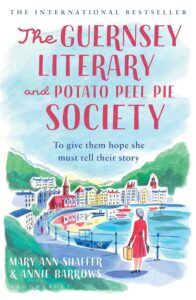
10. The Guernsey Literary and Potato Peel Pie Society by Mary Ann Shaffer (2008)

I loved this book. I really did.

It takes the hardest material and makes it look easy. The Channel Islands, occupied by Germany for five years, the only British soil the Nazis ever held. A literary society on Guernsey that was invented as a cover-story when a group of islanders were caught breaking curfew, and which then, against the odds, became real. People started actually reading the books. They started actually meeting. The lie became a literature.

The novel is told entirely in letters, which is a structural decision so confident I admire it before I even begin reading. No narrator. No commentary. Just letters between Juliet Ashton, a London writer recovering from the Blitz, and the islanders who write to her one by one. You piece the story together yourself. And what gives the book its life is how fun it is, and that is not a word I use lightly about wartime fiction. It is light, it is warm, it is full of the small daily heroisms of ordinary people, and the author handles material that could so easily have been heavy with the lightest possible touch.

In the film, the Tom Courtenay part, beautifully played, he’s the chairman of the book club, he organises the whole thing, and it’s beautifully done. It’s just a lot of fun on a subject which can’t have been a lot of fun at the time.

It is genuinely sad that Mary Ann Shaffer did not live to see her novel published. She wrote one book in her life. Her niece, Annie Barrows, finished it from her notes after she died. They got it right between them.

For Adam & Eve, what I took from Guernsey was a reminder that occupation is not only suffering. It is also bridge clubs, and forbidden books, and small acts of wit, and people becoming better than they thought they were because the alternative was to become worse. Shaffer understood that. So, I hope, do I.

If you want a book that is impossible to put down, that you will read in two evenings, that will leave you smiling and crying at the same time, this is the one.A&E Covers P{t 1


The Guernsey Literary and Potato Peel Pie Society

“Adam & Eve are still with me.”

The most insulting thing for an author. A friend was reading a book that was doing very well. He said, “Oh, I put it down with six chapters to go.” I couldn’t think of anything more insulting than putting a book down with six chapters to go. That should be when you can’t breathe.

The first reader of Adam & Eve, outside of the publisher, finished at ten past three in the morning, and woke me up to curse me for their lack of sleep. Two weeks later, she wrote again to say: “Adam & Eve are still with me.”

If You Loved These, You’ll Love Adam & Eve

If these books have stirred your appetite for wartime storytelling, I hope you will consider Adam & Eve when it arrives in October 2026.

It is the story I have spent years preparing to write. A novel that brings together everything I have learned about love, class, betrayal, and the extraordinary courage of ordinary people.

Two children born on the same day, Armistice Day 1918, whose lives will be shaped by the gathering storm of the Second World War. A shepherd’s son and an Earl’s daughter. Divided by class. United by love.

You can read the first two chapters here.

It is my final novel, and I wanted it to be my best. I hope you enjoy it.