Jeffrey's answer
I would not advise a first author to go straight into self-publishing. Let me tell you why, and let me be direct about it. Two reasons. One because it is really hard to build audience and market your books as well as write them. And secondly, and sadly because there is a great deal of money being taken from writers who do not need to lose it.
My advice is simple, and I will not soften it. Be realistic. Be practical. Try and get an agent. Try and get a publisher.
Why? Because what a publisher actually does — what a good agent and a good publisher between them actually do — is the work that is invisible to the writer until the writer has tried to do it alone. They edit. They design the cover. They print the book and get it into shops. They mount a publicity campaign. They sell foreign rights. They negotiate the audio. They put your book in front of the buyer at Waterstones, the buyer at Barnes and Noble, the buyer in Bombay. None of that is what writing is. All of that is what selling is. They are different trades.
If you are prepared to learn these skills, and execute them, or find a trusted team that can and will, then maybe self pubishing is for you. Otherwise how will readers know you exist (unless you have a large online following prior to publication).
I have been with my publishers for decades. I know how much of the success of my books has been their work, not mine. Pretending I could have done it alone would be both ungrateful and untrue.
And then, there are people who will happily tell you they will publish your book. What they actually mean is they will print it. They will then happily tell you they will get it into the shops — which they will not. They will then happily tell you how many copies they have sold — and they have not sold them.
There are, of course, some very reputable people doing this work. But there are sadly too many simply taking your money because you are desperate to be published. Don’t go anywhere near them.
There are then those who self-publish on Amazon, or on Kindle, and make a breakthrough. Peter May is one example. There are a handful of others. But don’t kid yourself. It’s one in ten thousand. Don’t go into it thinking that’s the way.
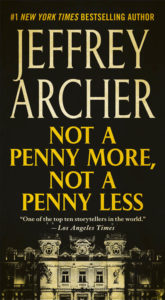
If you finish your manuscript and you have done the work — fourteen drafts, fifteen, more if it needs them — send it to agents. Send it in batches. Expect rejection. Fifteen publishers turned down Not a Penny More, Not a Penny Less, and Deborah Owen kept fighting. Send it again. Send it to the sixteenth.
Self-publishing should be the option you reach for after the traditional route has been tried and exhausted, not the option you start with. The first author who self-publishes by default is, in my experience, the first author who does not get read.
Be realistic. Be practical. Try and get an agent. Try and get a publisher.
A few practical notes
- Don’t go anywhere near the predators. A great deal of the self-publishing services industry exists to take money from hopeful writers. They will tell you they will publish, distribute, and market your book. They will print it. They will not do the rest. Read every contract. If a “package deal” promises bestseller status, walk away.
- The self-publishing breakthrough is one in ten thousand. Peter May, E.L. James, Andy Weir, Hugh Howey — yes, they exist. They are the four examples everyone quotes because there are not many more. Plan as if you will not be the next one, because the maths says you won’t.
- Try traditional first. Try it properly. Send to 15–25 agents in batches. Take feedback seriously. Iterate. Most published novelists get 10–30 rejections before someone says yes. Jeffrey had 15. The number is not the verdict.
- What a traditional publisher actually does. Editorial development. Bookshop distribution. Marketing budget. Cover design. Sales team. PR. Translation rights. Audio rights. The team of people who will do for you what you cannot do alone.
- What self-publishing actually is. Editing, cover, formatting, distribution, marketing, publicity, customer service, returns, accounting. Everything. On you. While also writing the next book.
- If you do self-publish, learn the second skill. The marketing of a book is a different trade from the writing of one. Master it, or hire it carefully — but do not pretend you can skip it.
- Useful directories. UK: the Writers’ & Artists’ Yearbook (annual reference). US: the Association of American Literary Agents. Both list reputable agents accepting submissions.
- Useful watchdogs for self-publishing. The Alliance of Independent Authors (ALLi) maintains a public watchdog list of services rated from “recommended” to “avoid.”
- For UK authors considering self-publishing. The Society of Authors publishes contract guidance. Read it before you sign anything.
- The marketing question is the question. Whichever route you take, ask yourself: who is going to find readers for this book? If the answer isn’t clear, the book won’t sell.