Jeffrey's answer
Other writers.
Not the writing schools. Not the masterclasses, not the books-on-writing, not the conferences. Other writers. The ones whose books I keep on my desk and read every morning before I begin my own work. They are the ones who taught me, and they go on teaching me, every day I sit down to write.
Three writers, in particular, I would name.
The first is Corlies Smith — who is technically not a writer but an editor. He once edited J.D. Salinger. He took me through several of my early books. He gave me, between the years 1975 and 1980, the three pieces of advice I have lived by ever since. Make the problem more difficult. Hide the clue in the next sentence. And, when I once asked him, “What is the difference between a great writer and a great editor?” — he looked at me and said, “The first draft.” That has stuck with me forever. The great writer can produce a first draft that the great editor would have died to produce. The rest, in editing terms, is craft. But the first draft — the original idea, the original story, the original voice — is something the editor cannot conjure. It has to come from the writer.
The second is Stefan Zweig. He is the writer I read the most when I am writing my own books, because I know I will never be that good.
I came to him late. I was past seventy. I was in India, signing books, and a lady came up to me and said, “Cain and Abel is the second-best book I’ve ever read in my life.” I confess I was rather pleased — until I had the wit to ask her, what was the first? She introduced me to Zweig. I went home, ordered everything he had written, and read it. To discover a writer of that quality at that age is one of the privileges of the long career. I have, since then, read every word he has written. I will read him for the rest of my life.
I read Zweig before I sit down to write, in the early morning, because reading great prose just before writing is the closest thing I know to fuel. It calibrates the ear. It reminds me of what the language can do. Without that calibration, the writer drifts — they lower their own bar. The writer who reads great writing every morning does not have that problem.
The third is not one writer but a small set of them. Damon Runyon — for the dialogue and the rhythm of New York. H. H. Munro, the man who wrote as Saki — for what a short story can be. Charles Dickens — for the storytelling and the social width. Agatha Christie — for the discipline of the puzzle. Alexandre Dumas — for sustained suspense. These are the writers I read constantly. They teach me, if I am observant, how the tricks are played. The writer who reads only contemporary novels learns only the conventions of the moment. The writer who reads across centuries learns the deeper architecture of fiction — what works, what survives, what travels.
Every project teaches you something different. Kane & Abel taught me about parallel lives. The Clifton Chronicles taught me to think across decades and multiple books in a series. The William Warwick Novels taught me discipline — eight books, eight crimes, from constable to Chief Superintendent, and not one book more. The next book will teach me something I have not yet learned, because I have not yet written it. That is the rule of writing: it does not get easier. It teaches different things.
My one piece of advice for any writer reading this. Find the writers who humble you. Read them every day. Not the writers you can already match. The writers who, when you read them, make you certain you will never be that good. They are the ones who will teach you. The ones you can already match will only confirm what you already are.
The writer who reads great writing is the writer who improves. The writer who reads only their own pages is the writer who plateaus.
A few practical notes
- Read across centuries, not just within your decade. Contemporary novels teach the conventions of the moment; older novels teach the deeper architecture of fiction.
- Find the writers who humble you. Read them daily. Not the writers you can already match. The ones who, when you read them, make you certain you will never be that good. They are the teachers.
- Read 30 minutes of great prose immediately before you write. The ear calibrates. The morning’s work has something to aim at.
- Read in your genre AND outside it. The crime writer who only reads crime writes derivative crime. The thriller writer who reads Zweig and Saki writes thrillers with real people in them.
- Editors are teachers — pay attention to your editor’s notes. A serious copy edit is a free masterclass.
- Audiobooks count, but differently. Listening to great prose calibrates the ear differently from reading. Both are useful; neither replaces the other.
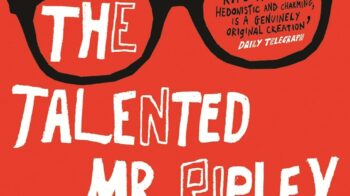
- Writers’ writers worth seeking out. Stefan Zweig (start with Beware of Pity or the novella Chess). H. H. Munro / Saki (the Complete Short Stories). Damon Runyon (Guys and Dolls). Patricia Highsmith (The Talented Mr Ripley). William Trevor (the short stories). All cheap second-hand. All humbling.
Resource for finding more. The Paris Review interviews — every great novelist of the last seventy years has been interviewed in the Paris Review’s Writers at Work series, and they all name their teachers. Free. Online.