Jeffrey's answer
As long as the story needs. No longer. No shorter.
That is the unhelpful but honest answer. The helpful answer is more specific. A modern novel — a thriller, a contemporary novel, a literary novel — sits comfortably between 80,000 and 130,000 words. That range covers ninety per cent of what is published today. Step outside it and you are asking your publisher, your bookshop, and your reader to make an exception, and exceptions are harder than they look.
Bleak House, which I take to be Dickens’s masterpiece, runs to seven or eight hundred pages. It would never work today. Modern readers will not sit still for it. But — and I think this matters — if Dickens were alive today, and he was clever and talented enough that he would have adapted, Bleak House would be 450 pages, and it would still be a masterpiece. The genius did not depend on the length. The genius found the length the era allowed.
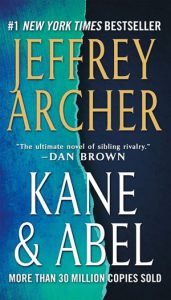
Kane & Abel runs to roughly one hundred and fity thousand words. It is the one of the longest novel I have ever written, and several of my publishers, in several countries, suggested at various points that it might be improved by being shorter. I disagreed, kept the length, and the book has sold rather more copies than they predicted. Length, in fiction, is not the enemy. Boredom is the enemy. A long book that does not bore the reader will be read. A short book that does will be put down on page eight.
The mistake first-time novelists make most often is to write too long. The first draft of a debut novel is almost always thirty per cent too long. The cuts come in drafts five, six, seven — and they are painful, because every paragraph cut is a paragraph the writer worked over and was proud of. The discipline of cutting is, in my experience, the discipline that separates a finished book from an unfinished one.
Hemingway wrote short. Simenon wrote short. Maugham wrote short. Dickens wrote long. Tolstoy wrote long. Both schools have produced masterpieces. Pick the school that suits the story you have. Then make the story sit comfortably inside the length the era allows.
If in doubt: aim for ninety thousand words. Write it. Cut to eighty-five. Ship.
A few practical notes
- Standard fiction: 80,000–100,000 words. Industry sweet spot. Most agents and publishers expect debut novels in this range. Outside it, harder to sell.
- By genre. Literary fiction 70–110k. Commercial/thriller 90–110k. Historical/epic 100–130k. Romance 70–90k. YA 60–80k. Sci-fi/fantasy can run 100–150k.
- First novels almost never run above 130,000 words. Bigger books cost more to print and risk more for the publisher. Save the long novel for book three.
- Word count is what matters, not page count. Different fonts and layouts produce different page counts. Always quote word count.
- You can be too short. Below 60,000 words feels like a novella to readers and may be rejected as too thin.
- Cut on the way out, not on the way in. Most published novels lost 20–30% of their first draft to the cut.